

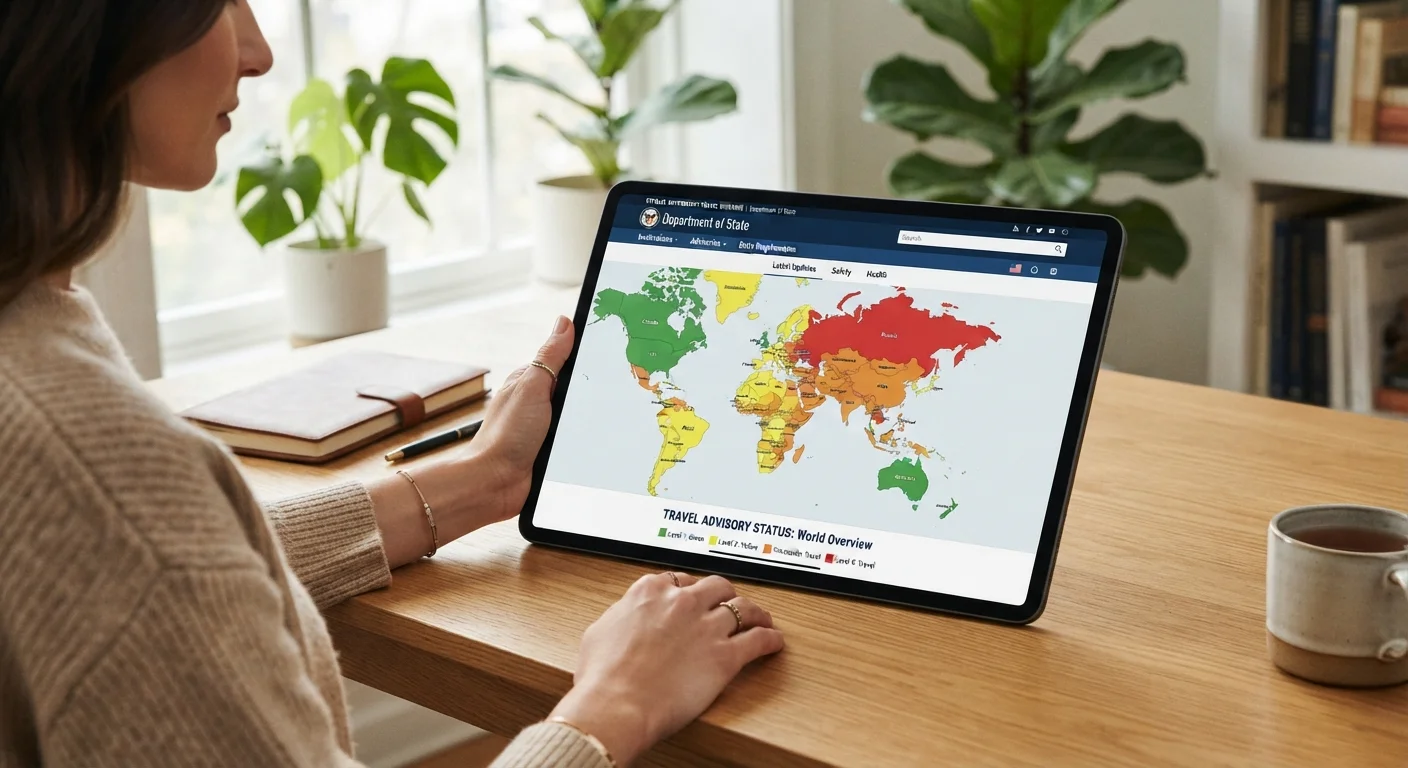
The Four-Level System the U.S. Uses
The U.S. Department of State issues travel advisories for every country in the world, organized into four levels. Understanding what each level represents - and what it doesn't - is one of the most practical skills a traveler can develop.
| Advisory system issuer | U.S. Department of State (travel.state.gov) |
| Number of advisory levels | 4 (Level 1-4) (U.S. Department of State) |
| Level 1 meaning | Exercise Normal Precautions |
| Level 4 meaning | Do Not Travel |
| Where to verify advisories | travel.state.gov (official source) |
| Traveler enrollment program | Smart Traveler Enrollment Program (STEP) (U.S. Department of State) |
Level 1 - Exercise Normal Precautions is the baseline. It means the destination presents no unusual safety concerns beyond what you'd expect in any unfamiliar place. Most popular travel destinations sit at Level 1.
Level 2 - Exercise Increased Caution is the most misread level. It does not mean "don't go." It signals that specific risks - such as petty crime, civil unrest in isolated areas, or health concerns - exist and deserve awareness. Many widely visited countries, including popular European destinations, carry a Level 2 rating at various points in time.
Level 3 - Reconsider Travel is a meaningful escalation. The State Department is signaling that significant risks - political instability, high crime, terrorism, or health emergencies - are present enough that travelers should weigh whether the trip is necessary and plan accordingly.
Level 4 - Do Not Travel is the strongest warning and is reserved for countries experiencing active conflict, extreme civil unrest, or situations where the U.S. government has limited ability to assist its citizens. These advisories are issued with genuine urgency and should be taken seriously.
Always verify the current advisory for your destination directly at travel.state.gov before finalizing plans, since levels can change. For context on how safety fits into broader research, see how to research a destination without drowning in information.
What Advisories Don't Tell You
Travel advisories are country-wide assessments, and that's both their strength and their limitation. A country-level advisory cannot reflect the full diversity of conditions within a large or regionally varied nation. One region may experience unrest while another remains calm and well-visited.
Travel Advisory
An official government notice rating the risk level of traveling to a specific country or region. In the U.S., these are issued by the Department of State and updated as conditions change.
Level 2 Advisory
A U.S. State Department rating indicating travelers should exercise increased caution due to specific, identifiable risks. It does not constitute a recommendation to avoid travel.
STEP (Smart Traveler Enrollment Program)
A free service from the U.S. Department of State that allows U.S. citizens traveling abroad to register their trip with the nearest embassy or consulate. It facilitates contact during emergencies.
Regional Advisory Breakdown
Country-specific pages on travel.state.gov often include sub-national risk assessments, flagging individual states or cities where the risk differs from the national-level advisory.
The State Department addresses this with regional breakdowns within individual country pages, flagging specific states, provinces, or cities where risks differ meaningfully from the national picture. Reading past the headline level number into these details is where the real value lies.
Advisories also don't capture every risk category equally. They weight political, security, and health threats heavily - but factors like natural disaster risk, infrastructure quality, or petty crime can receive less prominence. This is why travelers are encouraged to cross-reference advisories with other official sources such as the CDC's Travelers' Health website for health-specific guidance, and their destination country's own tourism safety information.
It's also worth reading our companion piece on common myths about travelling safely - several widely held beliefs about destination safety can create a false sense of confidence that advisories alone won't correct.
How to Use Advisories as Part of a Broader Plan
Travel advisories are a starting point, not a final verdict. Experienced travelers treat them as one layer of a broader risk picture alongside travel insurance, registration with the Smart Traveler Enrollment Program (STEP), and practical in-country awareness.
Check Your Insurance Policy Against the Advisory Level
Some travel insurance policies contain exclusions tied to U.S. State Department advisory levels - particularly Level 3 or Level 4 destinations. Before purchasing a policy or finalizing travel to a higher-advisory country, review the policy's terms carefully. Contact the insurer directly if you have questions about coverage thresholds.
If you're traveling to a country at Level 2 or above, understanding what travel insurance actually covers becomes especially important. Some policies exclude coverage for incidents in countries under specific advisory levels - always check your policy terms before you travel.
Timing matters too. A destination that carries a Level 2 advisory due to seasonal weather risks looks very different during stable months. Shoulder season travel decisions can intersect with advisory status in ways worth thinking through.
Finally, don't overlook financial safety as part of the broader picture. In destinations with elevated advisory levels, awareness of common financial vulnerabilities is equally important - see our guide on staying financially safe while travelling abroad for practical context.
This article provides general travel information for educational purposes only. Always verify entry requirements, safety conditions, and travel advisories with official government sources before making travel decisions.
The content provided on our blog site traverses numerous categories, offering readers valuable and practical information. Readers can use the editorial team’s research and data to gain more insights into their topics of interest. However, they are requested not to treat the articles as conclusive. The website team cannot be held responsible for differences in data or inaccuracies found across other platforms. Please also note that the site might also miss out on various schemes and offers available that the readers may find more beneficial than the ones we cover.