

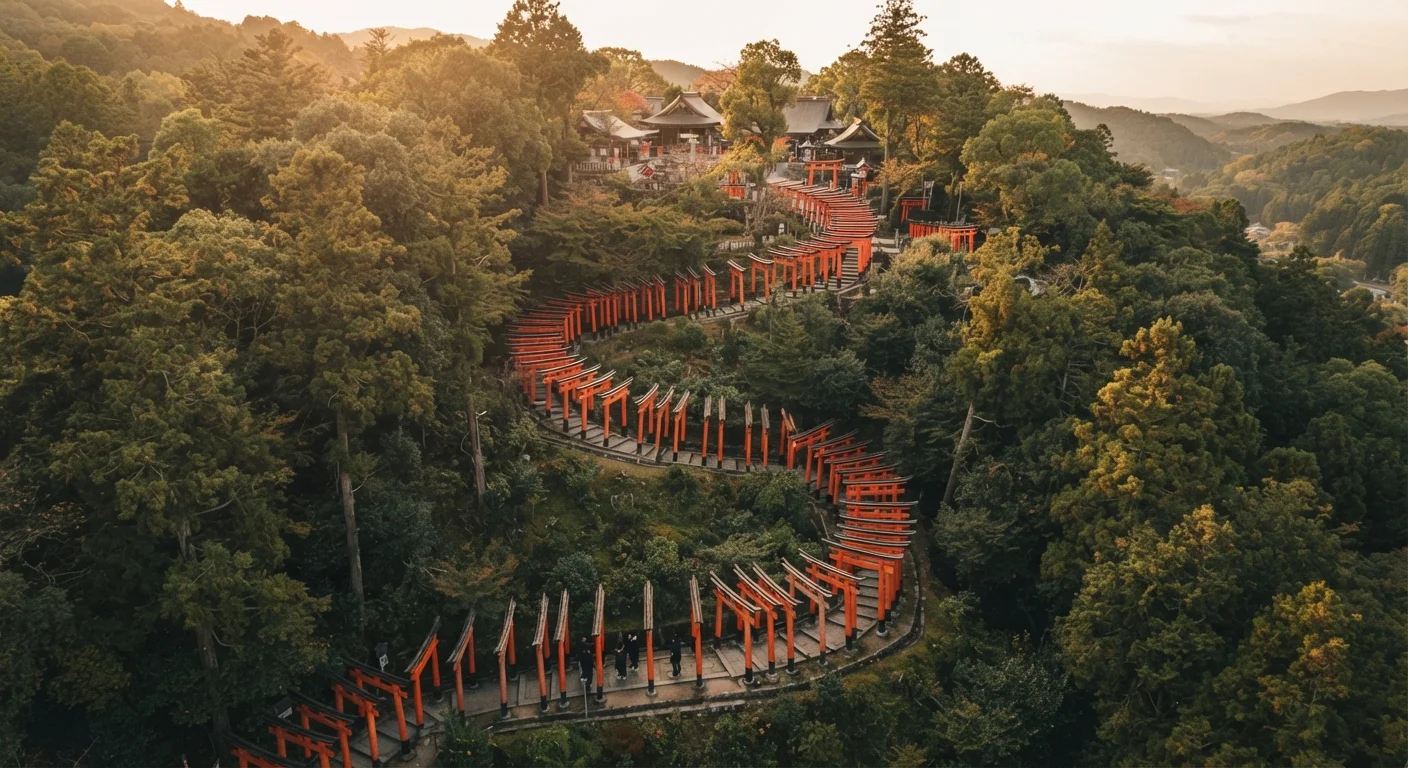
Why Japan Surprises Even Seasoned Travelers
Japan is consistently ranked among the world's most visited destinations, and for good reason: it's safe, efficient, visually stunning, and culturally rich in ways that reward curiosity. But many first-time visitors arrive with mental models built from other international trips - and those models don't always transfer. Customs around money, manners, and movement are genuinely different here, and misreading them can lead to avoidable awkward moments or unnecessary stress.
This isn't a country that punishes mistakes harshly - Japanese hospitality is famously gracious. But understanding a few key realities before you land will help you move through Japan with more confidence and deeper appreciation. If you're still sorting out pre-trip logistics, it's also worth reviewing common visa misconceptions to make sure your entry paperwork is solid.
Myth
Tipping your server or guide is a polite way to show appreciation in Japan.
Fact
Tipping is not part of Japanese culture and can actually cause confusion or offense - quality service is simply expected as standard.
In many Western countries, leaving a tip signals gratitude. In Japan, the opposite can be true. Service staff may feel uncomfortable or even obligated to return the money. The concept of omotenashi - wholehearted hospitality given without expectation of extra reward - underpins Japanese service culture. Excellent service is the baseline, not an upsell. Trying to tip, however well-intentioned, can disrupt this dynamic. If you genuinely want to express thanks, a sincere verbal acknowledgment or a small wrapped gift is far more culturally appropriate.
Myth
Credit and debit cards are accepted pretty much everywhere, just like back home.
Fact
Japan remains significantly cash-dependent; many restaurants, smaller shops, and rural businesses accept cash only.
Japan's reputation for technological advancement sometimes creates the false impression that it's entirely cashless. While card acceptance has grown - particularly in urban convenience stores and larger hotels - a surprising number of traditional restaurants, local markets, and rural accommodations still operate on a cash-only basis. ATMs at 7-Eleven and Japan Post Bank locations reliably accept international cards, making them your best friends during a trip. Carrying a reasonable amount of yen at all times is a practical necessity, not an afterthought.
Myth
Japan's trains are so intuitive that you can figure them out as you go.
Fact
The rail network is extensive and multi-operator, and understanding fare zones, IC cards, and Shinkansen reservations in advance saves significant time and stress.
Japan's train system is genuinely world-class - punctual, clean, and far-reaching. But it involves multiple overlapping operators (JR, private lines, metro systems), each with separate fares and ticketing. An IC card such as Suica or Pasmo simplifies local travel enormously by functioning as a prepaid transit card across most networks. The Japan Rail Pass, useful for longer intercity travel, must typically be purchased before arriving in Japan. Understanding how transit logistics work before you fly can make the whole journey smoother. Research your route types ahead of time - you'll thank yourself at the ticket gate.
Myth
You can talk on your phone, eat, and chat freely on Japanese trains.
Fact
Talking on the phone and eating on local trains are considered impolite; quiet, phone-call-free travel is the widely observed norm.
Japanese commuter trains have a near-library atmosphere by Western standards. Phone calls are generally avoided in favor of texting, and eating on local and metro services is frowned upon - though long-distance Shinkansen journeys are a notable exception, where ekiben (station bento boxes) are a beloved tradition. Keeping voices low, avoiding speaker-phone use, and not taking up extra seat space with bags are all part of standard train etiquette. These aren't rigid laws, but they're widely observed social norms that visitors will notice immediately - and are expected to follow. Cultural etiquette shifts dramatically from country to country, and Japan is a vivid example.
Myth
Removing your shoes is just a temple thing - you won't need to do it much.
Fact
Shoe removal is required in many traditional restaurants, ryokan (inns), and private homes - comfortable slip-on footwear is genuinely useful.
The practice of removing shoes before entering certain spaces is far more common than many visitors anticipate. Traditional restaurants with tatami mat seating, ryokan guesthouses, many temples and shrines, and almost all private homes follow this custom. A small entryway called a genkan marks the transition point. Wearing shoes that lace up tightly and take several minutes to remove becomes an awkward inconvenience very quickly. Footwear that slips on and off easily - and socks without holes, since you'll be in your socks frequently - is a small but genuinely practical travel consideration.
Practical Realities That Shape the Experience
Beyond social customs, Japan has a few logistical quirks that catch visitors off guard. Internet connectivity is generally excellent, but navigating it requires a plan - pocket Wi-Fi rentals or a local SIM card are common solutions that visitors arrange before or immediately upon arrival. Translation apps have improved dramatically, making menu reading and sign interpretation far easier than it used to be.
~47M
International visitors to Japan in 2024
Japan Tourism Agency data indicated record-level inbound tourism in 2024, reflecting the country's surging global appeal.
~80%
Small businesses preferring cash payment
Industry surveys have consistently found that a large share of Japan's smaller independent establishments still rely primarily on cash transactions.
Timing also matters more than many travelers anticipate. Cherry blossom season attracts enormous crowds and accommodation pressure, and that dynamic applies to other peak periods as well. Knowing what season shapes what experience helps you decide when - and how - to go. For broader trip planning strategies, the Travel Tips hub covers packing, safety, and on-the-ground problem-solving across destinations.
Don't Assume Rural Areas Mirror Tokyo
Tokyo and Osaka have dense English signage and international-facing infrastructure. Venture into smaller towns or rural prefectures and that changes quickly. Download offline maps and a translation app before leaving major cities. Having your accommodation's address written in Japanese characters is a simple precaution that can save real headaches.
The content provided on our blog site traverses numerous categories, offering readers valuable and practical information. Readers can use the editorial team’s research and data to gain more insights into their topics of interest. However, they are requested not to treat the articles as conclusive. The website team cannot be held responsible for differences in data or inaccuracies found across other platforms. Please also note that the site might also miss out on various schemes and offers available that the readers may find more beneficial than the ones we cover.