

Start here
Choosing the Right Tank Size and Equipment
Next
Cycling Your Tank Before Adding Fish
Then
Selecting Compatible Fish for a Beginner Tank
Ongoing
Maintaining Water Quality Long-Term
Choosing the Right Tank Size and Equipment
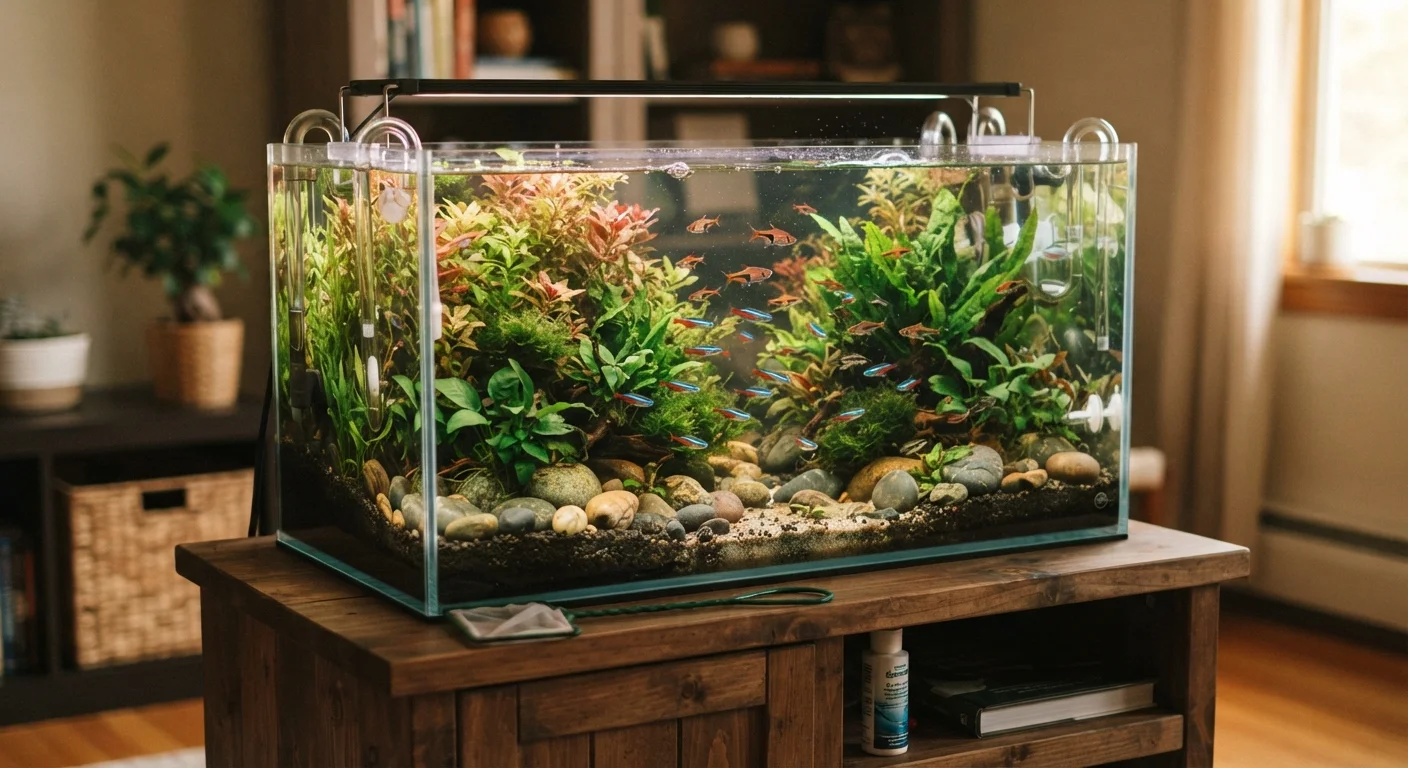
Bigger tanks are actually more stable and forgiving than small ones, because a larger volume of water dilutes waste and temperature fluctuations more effectively. For a first-time setup, a 10 to 20 gallon tank strikes the right balance - manageable to maintain, yet spacious enough to support a small community of fish.
Beyond the tank itself, you'll need the following core equipment before you begin:
- Filter: Removes physical debris and, crucially, hosts the beneficial bacteria that process fish waste. A hang-on-back or internal filter sized for your tank volume works well for beginners.
- Heater: Most tropical freshwater fish thrive between 74-80°F (23-27°C). An adjustable submersible heater with a built-in thermometer keeps temperature stable.
- Lighting: A basic LED fixture supports plant growth and lets you observe your fish clearly without overheating the water.
- Substrate: Gravel or fine sand provides a natural base and supports beneficial bacteria colonies.
- Water conditioner: Tap water contains chlorine and chloramines that are toxic to fish. A liquid dechlorinator neutralizes these instantly before you add water to the tank.
Nitrogen cycle
The biological process by which beneficial bacteria in your filter convert toxic fish waste (ammonia) into nitrite and then into the much safer compound nitrate.
Ammonia
A toxic compound produced by fish waste, decaying food, and organic matter. High ammonia levels are the primary killer in new, uncycled aquariums.
Beneficial bacteria
Microscopic organisms that colonize your filter media and substrate, processing harmful ammonia and nitrite so they don't build up to dangerous levels.
Fishless cycling
A method of establishing the nitrogen cycle by adding ammonia to a new tank before introducing any fish, so the bacteria colony develops without harming live animals.
Nitrate
The end product of the nitrogen cycle. Far less toxic than ammonia or nitrite, but it accumulates over time and is managed through regular partial water changes.
Water conditioner
A liquid additive that neutralizes chlorine and chloramines in tap water, making it safe to add to an aquarium.
Set up your tank on a level, sturdy surface away from direct sunlight and drafts. Fill it, run the filter, and set the heater before doing anything else - the equipment needs time to stabilize.
Cycling Your Tank Before Adding Fish
The nitrogen cycle is the single most important concept for any new aquarium owner to understand. In a freshwater tank, fish waste and uneaten food break down into ammonia, which is highly toxic. Beneficial bacteria - primarily Nitrosomonas and Nitrobacter - colonize your filter media and convert ammonia first into nitrite (also toxic) and then into the far less harmful nitrate.
Until those bacteria are established, your tank is not safe for fish. This process, called fishless cycling, typically takes 4 to 8 weeks. To cycle without fish:
- Add a small amount of pure ammonia (2-4 ppm) to the filled, running tank to feed the developing bacteria.
- Test ammonia, nitrite, and nitrate levels every 2-3 days using a liquid test kit.
- Continue adding ammonia as levels drop, signaling that bacteria are consuming it.
- The cycle is complete when ammonia and nitrite both read 0 ppm and nitrate has risen - usually above 5 ppm.
For a deeper look at what's happening chemically during this process, see our full guide to the nitrogen cycle.
Never Skip the Cycling Stage
Adding fish to an uncycled tank is the leading cause of preventable fish death in new aquariums. Ammonia spikes in an uncycled tank can reach lethal levels within days. Wait until your test kit consistently shows 0 ppm ammonia and 0 ppm nitrite before introducing any fish.
Selecting Compatible Fish for a Beginner Tank
Once your tank is cycled, resist the urge to buy many fish at once. Introduce a few at a time, allowing the filter's bacteria to adjust to the increased biological load. Adding too many fish suddenly can cause a mini-cycle, temporarily spiking ammonia again.
When choosing species, prioritize fish that:
- Share similar water temperature and pH requirements
- Have peaceful temperaments and won't compete aggressively for territory
- Stay small enough that your tank won't become overcrowded as they mature
Reliable beginner-friendly choices for a 10-20 gallon community tank include zebra danios, platies, guppies, and corydoras catfish. These species are hardy, widely available, and generally compatible with one another.
Always research a species' adult size, not just its appearance at the store. A fish sold at one inch may reach four or five inches when fully grown. Check that tank mates share compatible water parameters before purchasing.
Acclimate New Fish Before Releasing Them
When you bring fish home, float the sealed bag in your tank for 15-20 minutes so the water temperature equalizes gradually. Then slowly add small amounts of tank water to the bag over another 15 minutes before releasing the fish. This reduces the stress of sudden changes in temperature and water chemistry.
Maintaining Water Quality Long-Term
A stable aquarium is an actively maintained one. Even a well-cycled tank accumulates nitrates over time, and regular upkeep prevents problems before they start.
Build these habits into your routine:
- Weekly partial water changes: Remove and replace 20-25% of the tank volume using dechlorinated water matched to the tank's temperature. This dilutes nitrates without disrupting your beneficial bacteria colony.
- Regular water testing: Use a liquid test kit to check ammonia, nitrite, nitrate, and pH at least once a week, especially in the first few months. Strips are less accurate and not recommended for reliable monitoring.
- Filter maintenance: Rinse filter media monthly in a bucket of tank water (never tap water, which contains chlorine that kills bacteria) to remove accumulated debris.
- Feeding discipline: Overfeeding is one of the most common causes of water quality problems. Feed only what fish consume within 2 minutes, once or twice daily.
For ongoing guidance on water testing schedules, filter types, and troubleshooting common problems, our tank maintenance reference guide covers each topic in detail.
Test Kits: Liquid vs. Strip
Liquid test kits cost more upfront but are significantly more accurate than paper test strips. For a new aquarium owner monitoring a cycling tank or diagnosing a water quality issue, the extra precision is worth the investment. Many experienced hobbyists consider a liquid kit an essential piece of equipment.
Setting up a freshwater aquarium takes patience upfront, but a properly established tank is one of the most rewarding - and calmer - pets you can keep. Unlike dogs or cats (see bringing a cat home for the first time for that comparison), fish ask only for consistent water conditions and appropriate feeding.
This article is for general informational purposes only. Consult a knowledgeable aquatic specialist or veterinarian experienced with fish for guidance specific to your setup or if your fish show signs of illness.
Frequently Asked Questions
A full nitrogen cycle typically takes 4 to 8 weeks. The process establishes beneficial bacteria that convert harmful ammonia into less toxic compounds. Testing your water regularly will tell you when the cycle is complete and the tank is safe for fish.
It's strongly recommended that you do not. Adding fish before the tank is cycled exposes them to dangerous ammonia and nitrite spikes, which can be fatal. Allow the nitrogen cycle to complete fully before introducing any fish.
A general guideline is one inch of adult fish per gallon of water, though this varies by species. Overstocking causes poor water quality and stress. Research the adult size and behavior of each species before purchasing.
Hardy, peaceful species like zebra danios, platies, guppies, and corydoras catfish are commonly recommended for beginners. These fish tolerate a moderate range of water conditions and are widely available at pet stores.
Most established aquariums benefit from a 20-25% partial water change every week. This dilutes accumulated nitrates and keeps the environment stable without disrupting the beneficial bacteria in your filter.
Live plants are not strictly required, but they provide real benefits - absorbing ammonia, producing oxygen, and offering fish shelter and stimulation. Beginners can also use artificial decorations without harm to fish health.
The content provided on our blog site traverses numerous categories, offering readers valuable and practical information. Readers can use the editorial team’s research and data to gain more insights into their topics of interest. However, they are requested not to treat the articles as conclusive. The website team cannot be held responsible for differences in data or inaccuracies found across other platforms. Please also note that the site might also miss out on various schemes and offers available that the readers may find more beneficial than the ones we cover.