

Why Assumptions About Private Schooling Are So Sticky
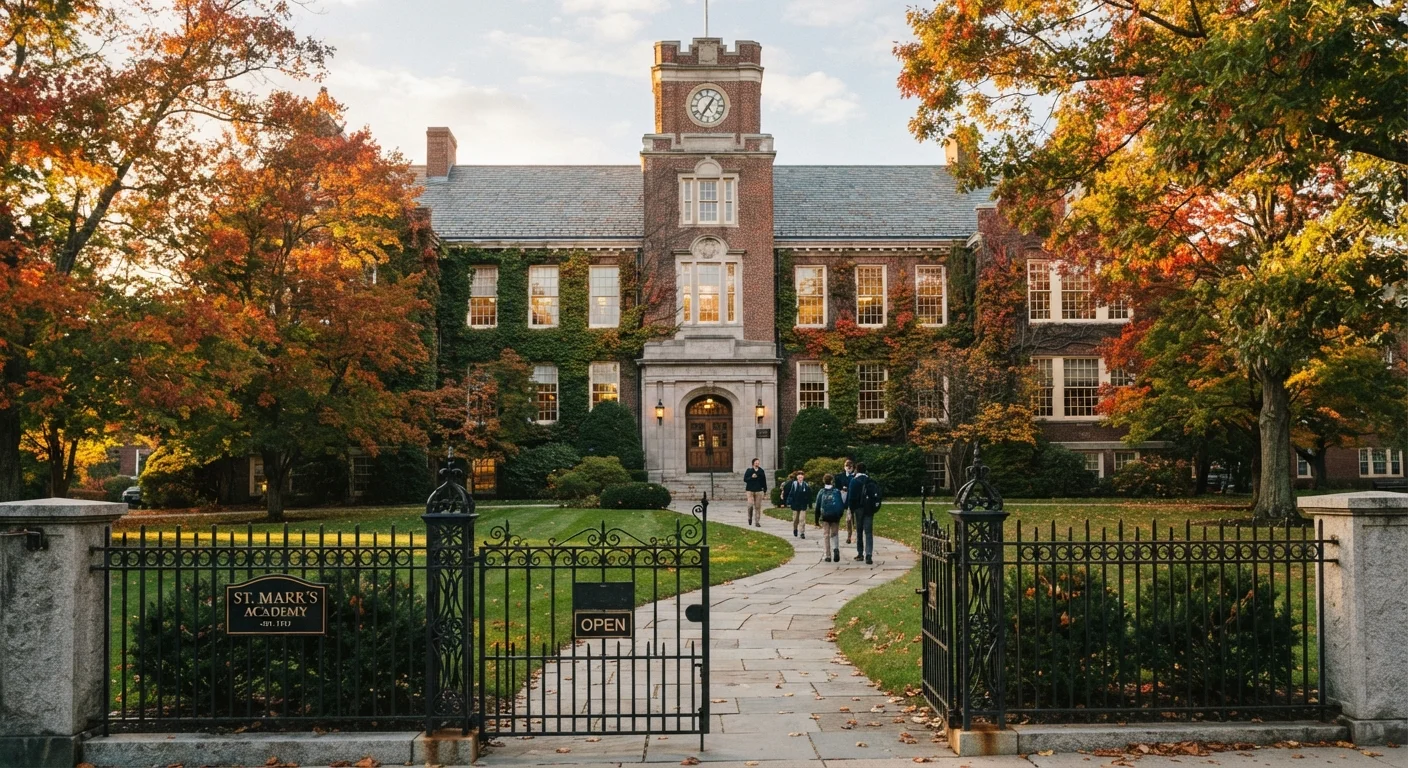
Private schools occupy an outsized place in public imagination - often associated with ivy-covered buildings, elite networks, and guaranteed success. These associations persist partly because they contain a kernel of truth for some institutions, and partly because marketing by schools themselves reinforces them. But the private school sector in the United States is genuinely diverse, spanning thousands of institutions with vastly different missions, price points, student populations, and outcomes.
Families comparing schooling options deserve an accurate picture rather than a polished one. The myths below represent the most common misconceptions the Learning & Education Editorial Team encounters - each one addressed with what research and policy actually show.
Myth
Private schools always outperform public schools academically.
Fact
Once researchers account for socioeconomic factors, the academic advantage of private schools is much smaller - and sometimes disappears entirely.
This is one of the most persistent myths in education. Raw test-score comparisons often show private school students performing higher on average, but those comparisons rarely account for the fact that private schools can selectively enroll students from higher-income, more educationally resourced households. Studies that control for family income, parental education, and prior achievement - including large-scale analyses using the National Assessment of Educational Progress (NAEP) - have found that comparable public schools frequently produce equivalent academic results. The school type itself is less predictive than the stability and resources a child brings to the classroom.
Myth
All private schools are religiously affiliated.
Fact
A substantial share of private schools in the U.S. are nonsectarian, operating without any religious affiliation or instruction.
Private schools span an enormous range of philosophies. Religiously affiliated schools - Catholic, evangelical Christian, Jewish, Islamic, and others - represent a significant portion of the private sector, but independent secular schools, Montessori schools, Waldorf schools, and college-preparatory academies with no religious mission are also widely available. According to the National Center for Education Statistics, nonsectarian private schools account for a meaningful share of private enrollment. Families who prefer a values-neutral environment have genuine options within the private sector. For a fuller picture of the schooling landscape, see our overview of schooling formats.
Myth
Private schools are only for wealthy families.
Fact
Many private schools offer need-based financial aid, scholarships, and sliding-scale tuition that extend access beyond high-income households.
Tuition at private schools ranges from a few thousand dollars annually at smaller community-based schools to well over $50,000 at elite boarding institutions. Many schools - particularly independent day schools and religiously affiliated institutions - maintain endowment-funded aid programs specifically designed to diversify their student bodies. Some states also offer publicly funded scholarship programs that can be applied toward private school tuition, though eligibility rules vary widely. Families should treat published tuition figures as a starting point for a conversation, not a final verdict on affordability.
Myth
Private school teachers are more qualified than public school teachers.
Fact
Private schools are generally not required to hire state-certified teachers, meaning qualifications can vary significantly from school to school.
Public school teachers in every U.S. state must meet state licensure requirements, which typically include subject-matter exams, student-teaching hours, and background checks. Private schools, by contrast, set their own hiring criteria and are not bound by state certification rules. Some private schools actively recruit teachers with advanced degrees and deep subject expertise; others prioritize cultural fit or experience over formal credentials. This is neither inherently better nor worse - but it means families should ask specific questions about faculty qualifications rather than assuming a private setting guarantees superior teaching.
Myth
Attending a private high school virtually guarantees college admission.
Fact
College admission depends on a student's individual record, and private school attendance alone does not secure a place at selective institutions.
Selective colleges evaluate applicants holistically - considering grades, course rigor, essays, activities, recommendations, and demonstrated interest. While some private schools have strong college-counseling resources and established relationships with admissions offices, these advantages are contextual, not automatic. Colleges also consider the quality of the applicant pool from a given school when interpreting transcripts, meaning a strong GPA at a rigorous private school carries different weight than the same GPA at a less demanding one. Students from strong public schools are admitted to highly selective colleges every cycle.
Myth
Private schools offer no accountability to anyone.
Fact
Private schools are subject to state health, safety, and anti-discrimination laws, and many pursue voluntary accreditation to demonstrate academic quality.
While private schools are exempt from many of the regulatory requirements that govern public schools - including standardized testing mandates and certain curriculum standards - they are not unregulated. They must comply with applicable civil rights laws, fire and building codes, and child protection requirements. Additionally, many private schools voluntarily seek accreditation from regional or national bodies, which involves curriculum reviews, facility inspections, and ongoing evaluation. Accreditation status is a useful, though imperfect, signal of institutional quality that families can ask about directly.
What Families Should Actually Evaluate
Stripping away the myths leaves a more useful question: what factors genuinely matter when considering a private school? Educators and researchers point to several evidence-backed considerations:
- Student-to-teacher ratio and class size - Smaller classes can allow more individualized attention, though this varies widely even within the private sector.
- Curriculum philosophy and structure - Whether a school follows a classical, Montessori, project-based, or traditional academic model has real implications for how your child will learn day to day.
- Support services - Ask specifically about learning support, counseling, and accommodations for students with identified learning differences. Private schools are not required to provide the same special education services as public schools under IDEA.
- Community and culture - School culture shapes a student's experience as much as curriculum. Visit, speak with current families, and look beyond brochure language.
Financial Aid Is Not Automatic
While many private schools offer need-based aid, the process is competitive and requires documentation similar to college financial aid applications. Families should contact admissions offices early, ask specifically about aid timelines, and never assume a school is out of reach - or within reach - without requesting detailed financial information.
For families also weighing alternatives such as charter, online, or home-based education, understanding how charter schools differ from traditional public schools can clarify another common set of misconceptions. Similarly, research comparing homeschooling and conventional schooling offers useful context for families considering a broader departure from traditional enrollment.
Outcomes Depend on Fit, Not Label
Research consistently shows that a student's home environment, peer relationships, and individual engagement matter more than school type alone. Choosing a private school because of its name or prestige is not a reliable path to better outcomes. Families should evaluate curriculum, culture, support services, and community fit before making any decision.
This article is for general informational and educational purposes only. Schooling decisions involve many factors specific to each child and family; consult with educators, school counselors, and other qualified professionals when evaluating options.
The content provided on our blog site traverses numerous categories, offering readers valuable and practical information. Readers can use the editorial team’s research and data to gain more insights into their topics of interest. However, they are requested not to treat the articles as conclusive. The website team cannot be held responsible for differences in data or inaccuracies found across other platforms. Please also note that the site might also miss out on various schemes and offers available that the readers may find more beneficial than the ones we cover.