

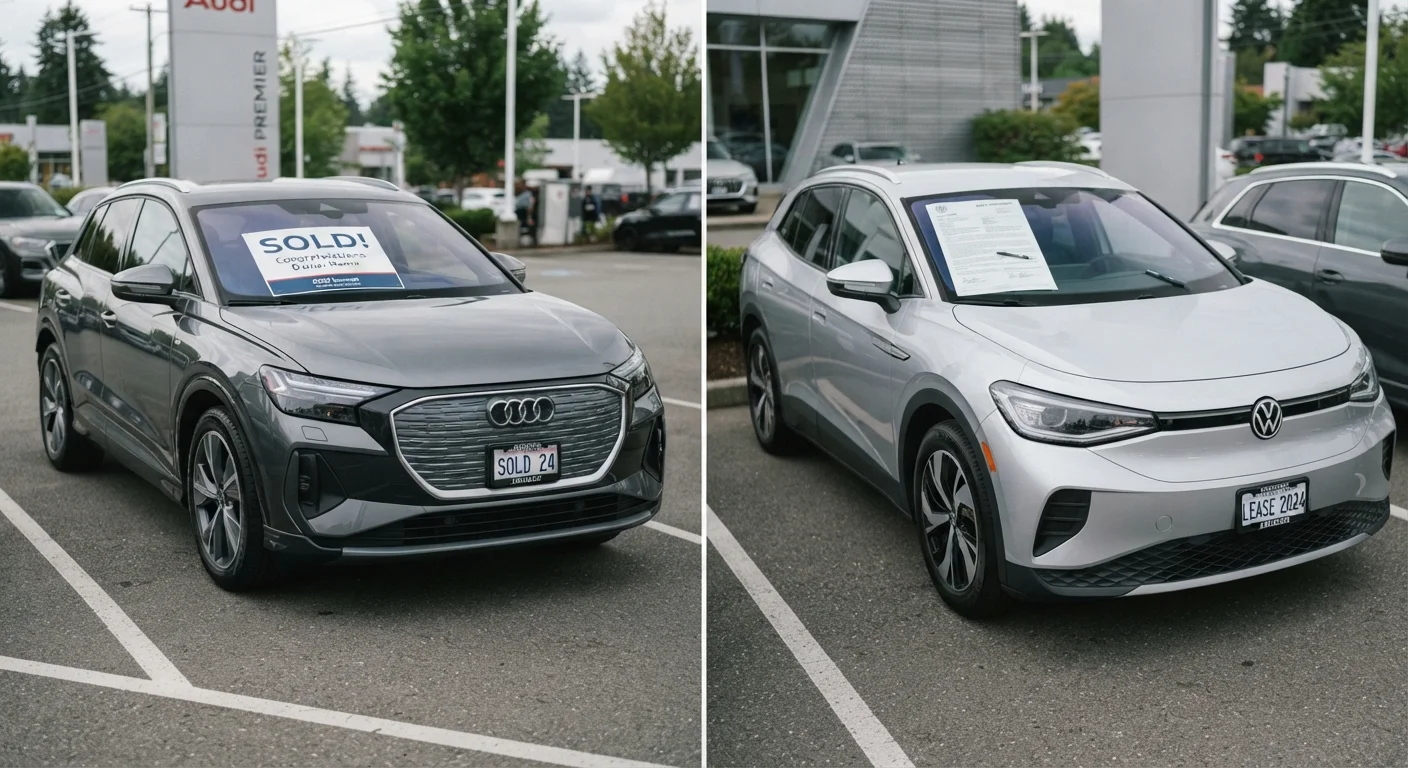
Option A
Owning (Buying) a Car
The long-term commitment with full control.
Best for: Drivers who want to build equity, drive without mileage limits, and keep a vehicle for many years.
Option B
Leasing a Car
The structured, lower-upfront alternative.
Best for: Drivers who prefer lower monthly payments, like switching vehicles every few years, and drive predictable annual mileage.
What You're Actually Agreeing To
The core difference between buying and leasing comes down to one question: who owns the vehicle? When you buy a car - whether with cash or through an auto loan - you are purchasing the asset. Once any loan is paid off, the title is yours. You can keep it, sell it, or modify it as you see fit.
When you lease, you are paying for the right to use a vehicle for a set period, typically two to four years. The leasing company (usually a financial arm of the manufacturer or a third-party lender) retains ownership throughout. At the end of the lease term, you return the vehicle, buy it out at a pre-agreed residual value, or start a new lease on a different car.
This distinction shapes everything else - from monthly costs to what happens if your circumstances change. For a fuller picture of ongoing financial obligations under either arrangement, see the true cost of owning a car.
| Criterion | Owning (Buying) | Leasing |
|---|---|---|
| Who holds the title | You (once loan is paid off) | Leasing company throughout |
| Monthly payment level | Higher (loan repayment) | Lower (depreciation + fees) |
| Equity built | Yes - grows with each payment | None |
| Mileage limits | None | Yes - overage fees apply |
| Modification allowed | Yes, freely | Generally no |
| End-of-term options | Keep, sell, or trade in | Return, buy out, or re-lease |
| Early exit flexibility | Sell and pay off loan balance | Fees typically apply |
Costs, Equity, and the Long-Term Financial Picture
Lease payments are calculated based on the vehicle's expected depreciation during the lease term, plus fees and financing charges. Because you're only paying for a portion of the car's value, monthly payments are generally lower than loan repayments on the same vehicle. However, at lease end, you walk away with no asset and nothing to show for those payments.
Buying costs more month-to-month on a comparable vehicle, but each payment chips away at a tangible asset. Once the loan is cleared, your monthly transportation costs drop significantly - a financial benefit that compounds the longer you hold the vehicle.
~49%
New vehicles financed via loans in the US
According to Experian's State of the Automotive Finance Market report, roughly half of new vehicle transactions involve an auto loan rather than a lease or cash purchase.
10,000-15,000
Typical annual mileage cap on a standard lease
Most standard lease agreements in the US set annual mileage allowances in this range, with per-mile overage charges that vary by lender and vehicle type.
Depreciation affects both arrangements. A purchased car loses value whether you own it or not, but as the owner, you can recapture some of that value when you sell. A lessee absorbs depreciation cost through their payments without gaining any residual benefit.
For drivers who switch vehicles frequently regardless, leasing may eliminate the hassle of private resale - though it also removes any upside from a vehicle that holds its value better than expected. Compare the routes available when purchasing outright at private sale vs. dealer.
Flexibility, Restrictions, and Responsibilities
Ownership gives you maximum flexibility. There are no mileage penalties, no restrictions on where you drive, and no one to answer to about the vehicle's condition beyond your own standards. You can also modify the car - from practical upgrades to cosmetic changes - without contractual consequence.
Leasing trades that flexibility for structure. Standard leases include an annual mileage allowance (commonly 10,000-15,000 miles); driving beyond it typically incurs a per-mile charge at the end of the contract. Lessees are also responsible for returning the vehicle in acceptable condition - excess wear and tear, beyond normal use, can generate end-of-lease charges.
Gap Insurance and Lease Agreements
If a leased vehicle is totaled or stolen, standard auto insurance may only cover the vehicle's current market value - which can be less than the remaining balance owed on the lease. Many lease agreements include or require Guaranteed Asset Protection (GAP) coverage to bridge this difference. If you're considering a lease, review whether GAP coverage is included in your contract and what your insurance policy covers. Consult your insurer for details specific to your situation.
Early exit from a lease is another area where lessees face friction. Terminating a lease before its end date usually involves substantial fees. Owners with a loan can sell the car at any time (subject to paying off the remaining balance), giving them considerably more exit flexibility.
For a comprehensive overview of your ongoing obligations under either arrangement, the vehicle ownership reference guide is a useful resource. First-time drivers should also review car ownership from day one for a practical introduction to registration, insurance, and roadworthiness requirements.
The content provided on our blog site traverses numerous categories, offering readers valuable and practical information. Readers can use the editorial team’s research and data to gain more insights into their topics of interest. However, they are requested not to treat the articles as conclusive. The website team cannot be held responsible for differences in data or inaccuracies found across other platforms. Please also note that the site might also miss out on various schemes and offers available that the readers may find more beneficial than the ones we cover.