

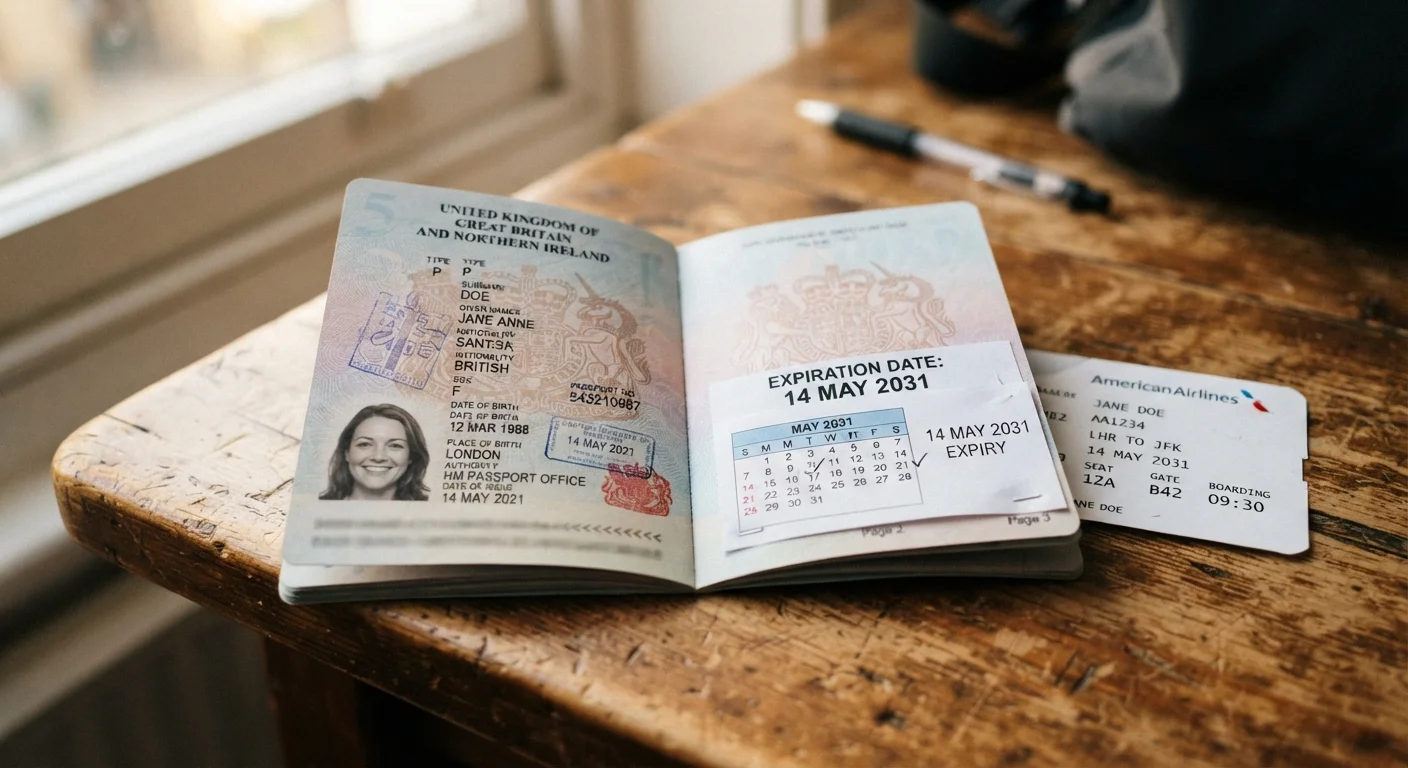
The Rule Most Travelers Don't Know Until It's Too Late
You've booked your flights, packed your bags, and double-checked that your passport is still valid. But here's the catch: valid for whom? The date stamped on your passport's data page isn't the only number that matters at the border.
Dozens of countries around the world enforce what's commonly called the "six-month rule" - a requirement that your passport remain valid for at least six months beyond your planned departure from their territory. If your passport expires five months after your trip ends, many countries will turn you away at the border, and your airline may not even let you board in the first place.
This trips up well-seasoned travelers and first-timers alike. It's one of the more consequential myths and misunderstandings surrounding international travel documents - and it's entirely avoidable with a little advance planning.
Requirements Vary by Nationality
The six-month rule doesn't apply equally to all travelers. The same destination country may have different validity requirements depending on your passport's country of issue, often based on bilateral agreements. Always check requirements specific to your nationality, not just your destination.
Why This Rule Exists - and Who Enforces It
The six-month validity requirement isn't arbitrary. Countries use it as a buffer to account for travelers who overstay, face medical emergencies, or encounter unexpected delays that extend their time in the country. A passport expiring while you're abroad creates a real administrative headache for everyone involved.
Enforcement happens at multiple points: the airline at check-in, immigration officers upon arrival, and sometimes even at connecting airports in third countries. Border agents have the authority to deny entry regardless of the reason for your visit, the cost of your ticket, or how many times you've visited before.
60+
Countries enforcing a six-month validity rule
According to travel document databases compiled by IATA (International Air Transport Association), more than 60 countries commonly apply a six-month validity requirement for foreign passport holders.
9 months
Recommended renewal window before travel
The US Department of State advises travelers to renew passports at least nine months before expiry to avoid disruptions to international travel plans.
Requirements aren't uniform. Some destinations - particularly within the European Union for Schengen Area travel - require only three months of validity beyond your stay. A small number of countries simply require that your passport be valid for the duration of your trip. The variables depend on your destination and your nationality. A US passport holder may face different requirements than a Canadian passport holder visiting the same country.
How to Check the Rules Before You Book
The most reliable sources for passport validity requirements are the official embassy or consulate website of your destination country (specifically their US entry requirements page) and the US Department of State's country-specific information pages. These are maintained by the relevant governments and reflect current policy.
It's worth checking these before you purchase flights, not after. Refund policies on non-refundable tickets rarely cover documentation oversights, and travel insurance policies vary widely on whether they cover self-inflicted document errors.
Set a Passport Expiry Reminder Now
Add your passport expiration date to your phone's calendar with a reminder set 18 months in advance. This gives you a clear signal to start the renewal process before your travel options become restricted. Pair this habit with a quick review of blank pages remaining each time you return from a trip abroad.
Keep in mind that requirements can change, particularly in response to diplomatic developments or public health situations. The pre-departure checklist for international travel is a useful framework for confirming all your documents are in order well before you leave.
The Smart Approach: Renew Earlier Than You Think You Need To
Travel planning often runs months ahead. If your passport expires within 12-18 months, you may find yourself in a gray zone where some destinations are fine but others are off the table. The practical solution is straightforward: renew early.
Most travel professionals suggest targeting a renewal when you have roughly nine months or more before expiry - enough runway to account for processing delays and to keep your full suite of destinations available. Passport renewal processing times can stretch considerably during busy travel seasons.
One more thing worth knowing: some countries also require a minimum number of blank visa pages - typically two - regardless of your expiry date. A passport that's valid but full of stamps can create the same headache at the border. Review both factors before any international trip.
For a broader look at what can go wrong between booking and boarding, experienced travelers' approach to long-haul friction points covers the kinds of overlooked details that make journeys go smoothly - or not.
Frequently Asked Questions
It means your passport must remain valid for at least six months after your planned return date, not just your departure date. If your passport expires within six months of your trip, many countries will deny you entry - even though the document itself hasn't expired yet.
No. Requirements vary by destination and sometimes by the traveler's nationality. Some countries require three months of validity beyond your stay, others require none beyond your actual travel dates. Always check your specific destination's rules through official embassy or government sources.
Yes. Airlines are responsible for verifying passenger documents and can face fines for transporting travelers who are denied entry. They will typically check your passport's validity against destination rules at check-in and may refuse to board you if the requirements aren't met.
Most travel advisors recommend renewing at least nine months before any planned international travel. Processing times can vary significantly, and during peak periods, standard processing may take several weeks or longer.
Check the official website of your destination country's embassy or consulate in the US, or consult the US Department of State's travel information pages. These are updated regularly and reflect current entry requirements for US passport holders.
The content provided on our blog site traverses numerous categories, offering readers valuable and practical information. Readers can use the editorial team’s research and data to gain more insights into their topics of interest. However, they are requested not to treat the articles as conclusive. The website team cannot be held responsible for differences in data or inaccuracies found across other platforms. Please also note that the site might also miss out on various schemes and offers available that the readers may find more beneficial than the ones we cover.