

Why Most Travelers Overpack - and How to Break the Habit
Overpacking isn't a character flaw - it's a rational response to uncertainty. When you're not sure what you'll need, bringing more feels safer. The problem is that a heavy, overstuffed bag creates real friction: checked bag fees, slower security lines, shoulder strain across cobblestoned streets, and the constant low-level stress of managing too much stuff.
The antidote isn't minimalism for its own sake - it's intentionality. Experienced light packers don't bring less; they bring exactly what's needed and nothing that isn't. That discipline comes from a clear trip profile, a versatile clothing strategy, and a willingness to edit before closing the zipper.
The 'One Out, One In' Editing Rule
Before closing your bag, challenge every item: if it serves only one purpose, consider leaving it behind. Experienced light packers often lay everything out, then remove roughly a third of it before repacking. That instinct to 'just in case' pack is the single biggest driver of overpacking.
For long-haul trips especially, a poorly packed bag compounds every friction point along the way. Understanding how experienced travelers handle long-journey stress is worth reading before any major trip.
Packing cubes
Compress and organize clothing into discrete sections, making repacking faster at each stop.
Luggage scale
Verify bag weight before departure to avoid airline overweight fees at the airport.
Travel-sized toiletry containers
Transfer liquids into TSA-compliant sizes to meet carry-on liquid rules without checking a bag.
Compression bags
Reduce bulk for bulky items like fleece layers or light jackets that resist folding.
Lightweight daypack or tote
Acts as your personal item on the plane and your bag for day trips once you arrive.
Step-by-Step: Pack Smarter for Any Trip
What you will need
Define your trip profile before you touch a suitcase
The most common packing mistake happens before a single item is chosen: opening the closet without a clear picture of what the trip actually demands. Note your destination's climate range, the formality level of your planned activities, and whether you'll be moving between multiple stops or staying in one place. A beach holiday, a city cultural tour, and a hiking trip each require fundamentally different kits - knowing which you're doing prevents the 'cover all bases' overpacking trap.
Pair this with a solid trip structure. If you haven't mapped out your days yet, our guide on building a well-structured travel itinerary can help you clarify exactly what activities you're actually planning - which directly informs what you need to pack.
Choose your bag based on the trip, not habit
Your bag size sets the ceiling on what you can bring, which makes it one of the most powerful packing decisions you'll make. Resist the reflex to grab your largest suitcase - it will fill up. For most trips under 10 days, a carry-on-sized bag is achievable with the right clothing strategy. For longer or more varied trips, understanding the genuine trade-offs is worthwhile: our breakdown of carry-on versus checked bag strategies covers the practical considerations by trip type.
Build a clothing list around versatile pieces
The goal is a wardrobe that mixes and matches across every day of your trip, not a separate outfit per day. Stick to a two- or three-color palette so tops, bottoms, and layers all work together. Prioritize fabrics that resist wrinkles, dry quickly when hand-washed, and pack flat - merino wool and nylon-blend synthetics are traveler favorites for exactly these reasons. A general formula for a week-long trip: three to four tops, two bottoms, one layer, one pair of versatile shoes worn on the plane. Adjust up or down based on laundry access.
Edit your toiletries ruthlessly
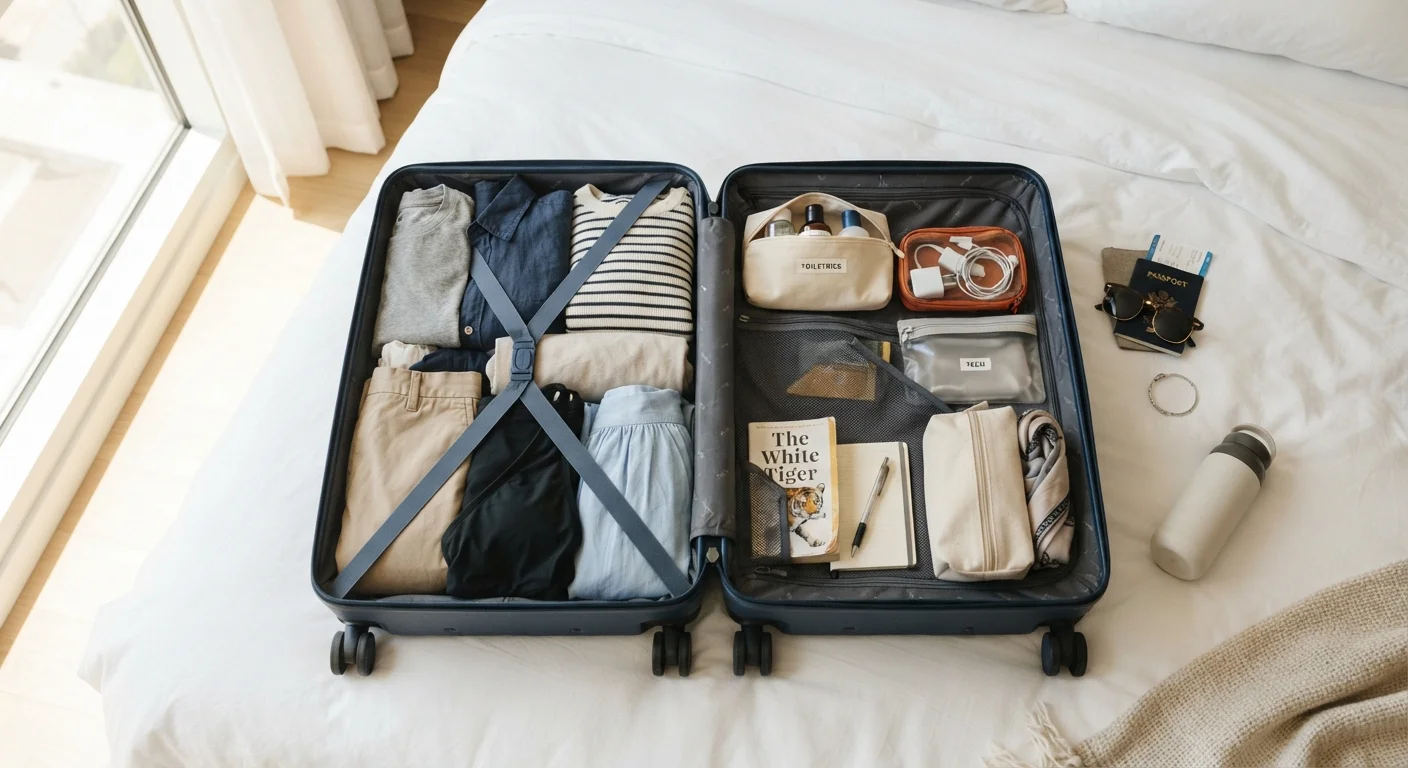
Toiletries are where bags quietly gain weight. Start by listing only items you use daily - then check whether your accommodation provides any of them (most hotels supply shampoo, conditioner, and body wash). Transfer remaining liquids into small reusable containers sized to meet the TSA 3-1-1 rule for carry-ons: liquids in containers of 3.4 oz (100ml) or less, all fitting in one clear quart-sized bag. Solid alternatives - shampoo bars, solid sunscreen, bar soap - eliminate the liquid limit problem entirely for many items.
Pack using the roll-and-cube method
Rolling clothes rather than folding them reduces wrinkles and uses space more efficiently, particularly for soft items like t-shirts, jeans, and casual pants. Organize rolled items into packing cubes by category - tops in one, bottoms in another, underwear and socks in a third. This system also speeds up repacking at each stop and means you never unpack everything just to find one item. Place heavier items (shoes, cubes with pants) near the bag's wheels or base; lighter items and your travel layer on top.
Do a final edit - then weigh the bag
Before you close up, remove everything and do one deliberate pass. For each item, ask: Will I genuinely use this on more than one occasion? Could I borrow, buy, or go without it if needed? Items that fail this test go back on the shelf. Once repacked, weigh the bag. If it's over your airline's limit, identify the heaviest optional items and remove them first. A luggage scale at home is far less stressful than a gate-agent scale at the airport.
For a broader pre-departure review that covers documents, insurance, and logistics, the pre-trip planning checklist is a useful companion to run through before you head out.
Medications Need Extra Planning
If you travel with prescription or controlled medications, documentation and customs requirements vary by country and cannot be assumed. Review what documentation typically matters and verify current rules with the relevant embassy or official government source before every trip. Never rely on informal advice alone when crossing international borders with medication.
Airline Carry-On Rules Vary Widely
Carry-on size and weight limits differ between airlines - and sometimes between fare classes on the same airline. Always check the specific restrictions for every carrier on your itinerary before you finalize what you're bringing. Assumptions based on a previous trip can lead to gate-check fees or forced bag-checks.
The content provided on our blog site traverses numerous categories, offering readers valuable and practical information. Readers can use the editorial team’s research and data to gain more insights into their topics of interest. However, they are requested not to treat the articles as conclusive. The website team cannot be held responsible for differences in data or inaccuracies found across other platforms. Please also note that the site might also miss out on various schemes and offers available that the readers may find more beneficial than the ones we cover.