

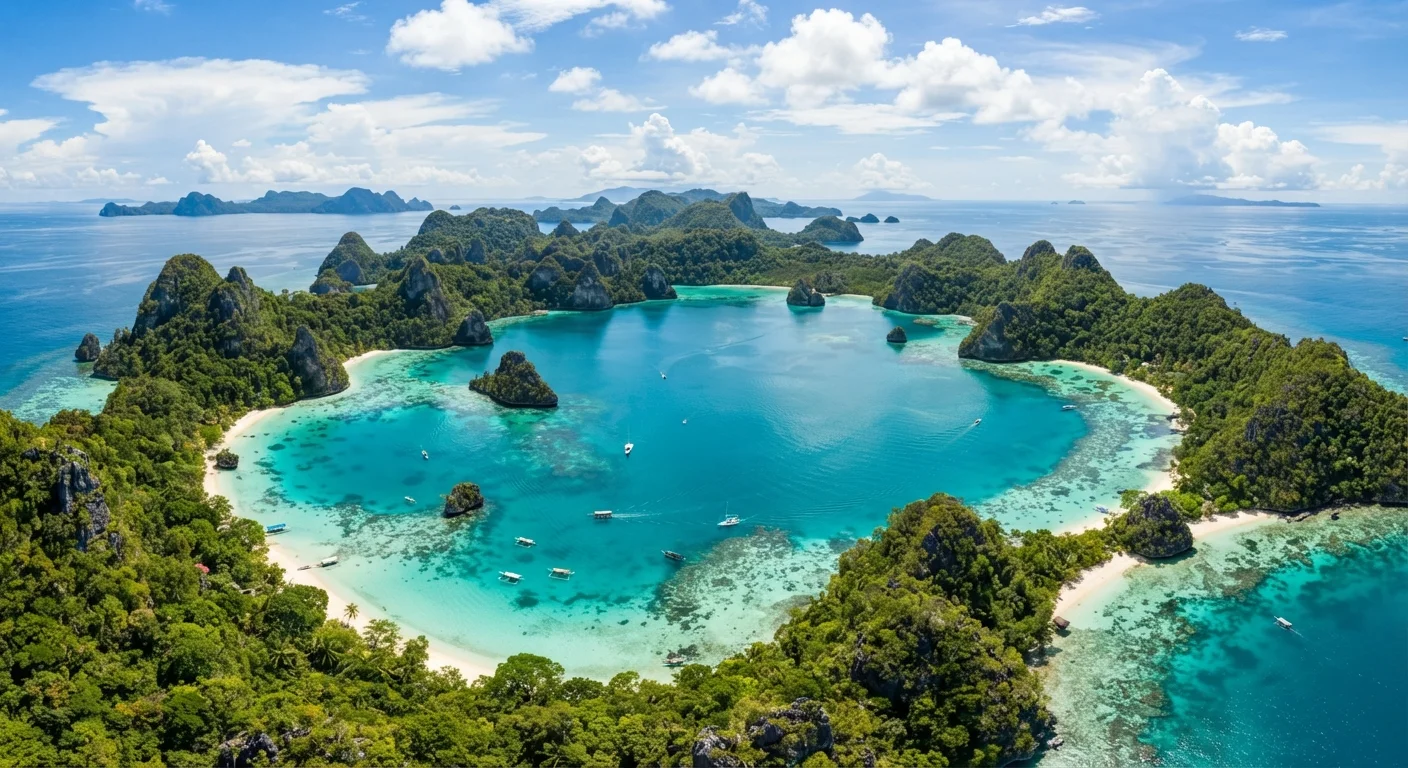
Why Island-Hopping Routes Demand More Planning Than Most Trips
Island-hopping in Southeast Asia sits near the top of many travelers' wish lists - and for good reason. The region packs extraordinary variety into a relatively contained area: limestone karst formations rising from turquoise bays in Thailand, volcanic beaches in Indonesia, reef-fringed atolls in the Philippines. But that variety is also what makes routing complicated. Unlike a continent-based road trip where you can adjust your route in real time, inter-island travel depends on ferry schedules, domestic flight networks, and seasonal sea conditions that won't bend to improvisation.
The islands of Southeast Asia belong to three distinct countries - Thailand, Indonesia, and the Philippines - each with its own entry requirements, transport infrastructure, and cultural context. Treating them as one interchangeable pool of tropical stops is the planning mistake that leads to exhausting itineraries, missed connections, and a trip that feels like a logistics exercise rather than a journey. The steps below are designed to help you think clearly through those layers before you commit to any bookings.
What you will need
For those new to international trip planning, our guide on researching a destination can help you build a reliable information base before working through the steps below.
Understanding the Three Main Island Regions
Before diving into the steps, a brief orientation helps. Thailand's southern islands divide into two coasts separated by a narrow peninsula. The Gulf of Thailand side - Koh Samui, Koh Phangan, Koh Tao - is renowned for clear, calm water and a well-developed tourist infrastructure. The Andaman side - Phuket, Krabi, Koh Lanta, Koh Phi Phi - offers dramatic limestone scenery and strong snorkeling. Both coasts are well-connected by ferry and domestically by budget airlines.
Indonesia's islands span an enormous geographic range. Bali is the most visited, with Lombok and the Gili Islands accessible by fast boat - a coherent cluster for a shorter trip. Moving further east brings you to Komodo (famous for its national park and dramatic landscapes) and Flores, which require more planning. Java, Sumatra, and Sulawesi each represent entirely different travel contexts.
The Philippines rewards patience and research. Palawan - including El Nido and Coron - is consistently highlighted for its island scenery and snorkeling. The Visayas region centers on Cebu and fans out to Bohol, Siquijor, and Negros. Siargao is increasingly well-known for surfing and a more relaxed vibe. Each cluster is largely self-contained, connected internally by bangka boats and small ferries but separated from other clusters by flights.
Monsoon Timing Can Make or Break a Route
Southeast Asia's island regions don't all experience monsoon season at the same time. Thailand's Gulf Coast (Koh Samui, Koh Phangan) tends to be wettest from October to December, while the Andaman side (Phuket, Krabi) is drier then. The Philippines can experience typhoons from June through November. Indonesia's Bali and Lombok experience the heaviest rains from December to March. Routing across countries without accounting for these windows can mean rough seas, canceled ferries, and wasted days.
Anchor Your Route Around Entry and Exit Points
Most international flights into Southeast Asia land in a handful of hub cities - Bangkok, Singapore, Kuala Lumpur, Bali's Denpasar, or Manila. Your route should radiate outward from your arrival point and loop back to a manageable exit, rather than zigzagging across the map. Decide early whether you're doing a single-country island trip or a multi-country arc. A Thailand-only trip can start in Bangkok and fan south through the Gulf or Andaman islands. A broader Southeast Asian route might enter via Singapore and end in Bali - but that scale demands more time and planning than most first-timers expect.
Map the Physical Geography Before Picking Islands
Pull up a map and actually look at the distances. The Philippines alone has over 7,000 islands, but they're spread across a region roughly the size of Italy. Indonesia's archipelago stretches across a distance comparable to the continental United States. Selecting islands that look close together on a small map can hide a six-hour ferry or a necessary domestic flight. Group your choices by island cluster: Palawan and Cebu are both beloved Philippine destinations, but traveling between them requires flying - they are not neighbors. In Indonesia, Bali, Lombok, and the Gili Islands form a logical cluster connected by fast boats. Komodo requires a separate commitment.
Assign a Minimum Stay to Each Island
One of the most common island-hopping mistakes is allotting too little time per stop. A single day on any island is usually absorbed by arrival logistics, settling in, and departure preparation - leaving almost no real experience. Two nights is a bare minimum; three to five nights lets you actually read an island's character. Some destinations reward longer stays: Palawan's El Nido genuinely merits four to five days to explore its lagoons and beaches. Thailand's Koh Lanta or Indonesia's Nusa Penida each offer enough distinct experiences to justify three nights comfortably. See our guide on pacing your trip for a deeper look at this tradeoff.
Cross-Check Each Island Against Monsoon Season
Once you have a tentative list of islands, verify the climate window for each one during your travel dates. Many travelers are surprised to learn that the Andaman and Gulf coasts of Thailand experience their wet seasons at opposite times of year - meaning a November trip that gets rained out in Phuket might be perfectly sunny on Koh Samui. The Philippines sits in a typhoon belt and carries higher weather risk from June through November, though exact exposure varies significantly by island and region. Always cross-reference climate data with the specific island, not just the country.
Sequence Islands to Minimize Backtracking
Lay your chosen islands in a logical geographic sequence - north to south, or following a ferry network's natural flow - rather than bouncing back and forth. In Thailand, the southern island chains follow a natural progression down the peninsula; hopping from Koh Tao to Koh Phangan to Koh Samui follows a sensible corridor. In the Philippines, island-hopping around the Visayas region (Cebu, Bohol, Siquijor) forms a tighter loop than mixing it with Palawan, which sits on a separate coast entirely. Treat your route like a one-way path rather than a star pattern radiating from a hub. This single change often cuts total transit time by a third or more.
Build Flexibility Into the Final Draft
No island-hopping route survives first contact with reality unchanged. Ferries get canceled in rough weather, a stop turns out to be more compelling than expected, or you simply need a rest day. Leave at least one unscheduled day per week of travel - not a day filled with backup options, but a genuinely open slot. If your route requires catching a specific ferry at a specific time, identify what happens if you miss it: is there another departure that day, or do you lose a full day? Planning for disruption isn't pessimism - it's the mark of an experienced traveler. For a full framework on building a route that holds up under pressure, see our beginner's roadmap to trip planning.
Build in a Transit Buffer Day
Between major island-hops - especially those involving a ferry plus a domestic flight - give yourself a buffer day rather than scheduling the next activity immediately. Delays are common, and a loose day turns a stressful scramble into a relaxed chance to explore wherever you land. This is especially valuable if you're crossing borders between countries.
Solo travelers planning this kind of multi-stop journey should also review our guide to solo trip planning, which covers how safety considerations and flexibility needs shift when you're on your own. For broader travel tips on staying organized on the road, our hub covers everything from packing to on-the-ground problem-solving.
Always Verify Ferry and Flight Schedules Directly
Inter-island transport schedules change seasonally, and routes listed online may be suspended during low season or severe weather. Confirm all ferry, speedboat, and domestic flight connections with operators or official sources close to your travel date. Entry requirements, visa rules, and health advisories also shift - check your government's official travel advisory pages before finalizing plans.
The content provided on our blog site traverses numerous categories, offering readers valuable and practical information. Readers can use the editorial team’s research and data to gain more insights into their topics of interest. However, they are requested not to treat the articles as conclusive. The website team cannot be held responsible for differences in data or inaccuracies found across other platforms. Please also note that the site might also miss out on various schemes and offers available that the readers may find more beneficial than the ones we cover.