

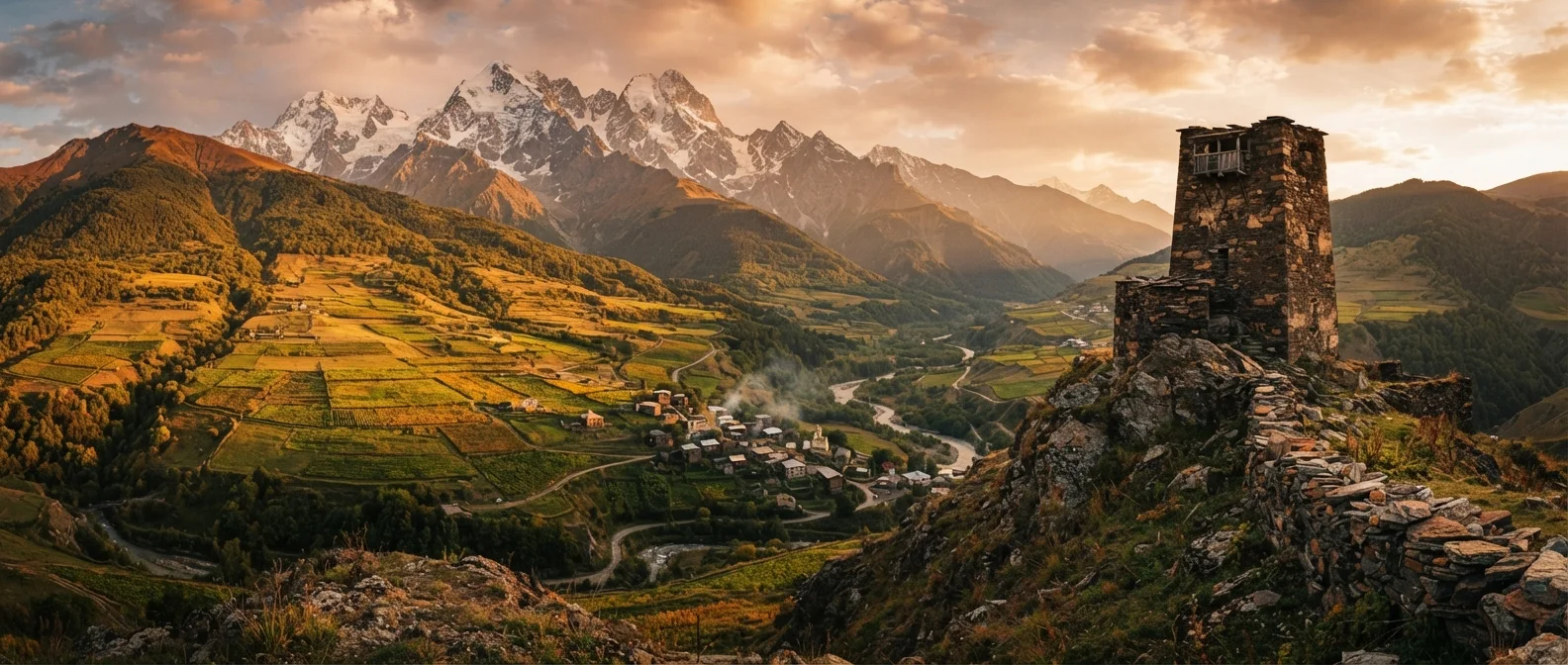
Where in the World Is Georgia?
Tucked between the towering Greater and Lesser Caucasus mountain ranges, Georgia occupies a strategically vital position that has shaped its identity for millennia. To its north lies Russia; to the south, Turkey and Armenia; to the east, Azerbaijan; and to the west, the Black Sea. This geographic position made ancient Georgia - historically known as Colchis and Kartli-Kakheti - a crossroads for Silk Road traders, conquerors, and pilgrims alike.
The country covers roughly 26,900 square miles, about the size of West Virginia, yet packs in extraordinary geographic diversity: subtropical coastline, high alpine meadows, semi-arid steppes, and dense temperate forest all coexist within a few hours' drive of one another. That range of landscapes translates directly into a richness of agricultural produce, cuisine, and outdoor adventure opportunities that consistently surprises first-time visitors.
A Note on Regional Travel Conditions
Some areas near Georgia's northern borders, including South Ossetia and Abkhazia, are subject to ongoing political disputes and are not under Georgian government control. Most standard travel advisories recommend that visitors avoid these regions entirely. Always consult your government's official travel advisory for the most current and specific guidance before planning your itinerary.
Tbilisi: A Capital Built on Layers of History
Georgia's capital, Tbilisi, was founded in the 5th century CE and has been rebuilt, invaded, and reinvented dozens of times since. The Old Town - known as Dzveli Tbilisi - is a labyrinth of balconied wooden houses, Persian-style bathhouses fed by natural sulfur springs, and churches representing centuries of Orthodox Christian architecture. The Narikala Fortress looms above it all, offering panoramic views across the Mtkvari River valley.
Modern Tbilisi has layered a vibrant contemporary culture over this ancient foundation. Independent wine bars serving natural Georgian wines, galleries showcasing emerging Caucasian artists, and a lively café scene coexist comfortably alongside 6th-century basilicas. The city rewards slow exploration on foot - many of its most compelling corners are tucked down narrow lanes invisible from main roads.
Navigate Tbilisi Like a Local
Download an offline map before arrival - many of Tbilisi's most interesting streets lack clear signage. The city's metro system is inexpensive and covers key districts, but the Old Town is best explored entirely on foot. Comfortable, flat-soled shoes are strongly recommended, as cobblestone streets are steep and uneven in places.
The Caucasus Highlands: Georgia's Wild North
For many travelers, Georgia's ultimate draw is the Greater Caucasus range stretching across its northern border. The Kazbegi region - anchored by the town of Stepantsminda - has become one of the Caucasus's most celebrated trekking destinations. The Gergeti Trinity Church, perched at roughly 7,200 feet above sea level with Mount Kazbek as its backdrop, has become one of the most photographed scenes in the broader region.
Further west, the Svaneti region offers an even more remote experience. Ancient defensive towers built by Svan families centuries ago still punctuate stone villages largely unchanged in character since medieval times. The UNESCO-listed Upper Svaneti is accessible by road - though conditions can be challenging - and rewards visitors with some of the most raw mountain scenery in Europe or Asia. Hikers should plan carefully, travel with appropriate gear, and consult local guides familiar with the terrain and seasonal conditions.
8,000+
Years of Georgian winemaking history
Archaeological findings from sites in the South Caucasus suggest grape cultivation and wine production in the region date back at least 8,000 years.
500+
Indigenous grape varieties cultivated in Georgia
Georgia is home to an extraordinary diversity of native grape varieties, many unique to the country, according to Georgian viticulture researchers.
14
Distinct alphabets currently in active use worldwide
Georgian's Mkhedruli script is among just 14 distinct writing systems considered currently active globally, reflecting the country's deeply independent cultural lineage.
3
UNESCO World Heritage Sites in Georgia
Georgia holds multiple UNESCO designations covering historic monuments and natural sites, including the historic churches of Mtskheta and the Upper Svaneti region.
Wine, Food, and 8,000 Years of Hospitality
Archaeological evidence suggests that winemaking in the South Caucasus - including present-day Georgia - dates back at least 8,000 years, making it one of humanity's oldest viticultural traditions. Georgian winemakers cultivate over 500 indigenous grape varieties, many found nowhere else in the world. The qvevri method of clay-vessel fermentation, recognized by UNESCO, produces distinctive amber wines that have sparked renewed global interest among natural wine enthusiasts.
Georgian cuisine is equally singular. Dishes like khinkali (twisted soup dumplings), khachapuri (cheese-filled bread in multiple regional variations), and mtsvadi (skewered grilled meat) reflect a cooking tradition shaped by both Eastern and Western influences. The concept of supra - a lavish, ceremonially structured feast presided over by a toastmaster called a tamada - is central to Georgian social life and considered a living cultural tradition. Visitors welcomed to a supra are likely to leave with a profound sense of Georgian generosity.
Practical Considerations for Visiting Georgia
Georgia is widely considered one of the more accessible destinations in its region for independent travelers. Tbilisi's international airport connects to major European and Middle Eastern hubs, and the country's road and rail network links most key destinations, though mountain roads can require 4WD vehicles and patience. Local marshrutka minibuses are the backbone of inter-city travel for budget-conscious visitors.
The country's currency, the Georgian Lari, offers straightforward exchange. Accommodation ranges from family-run guesthouses in rural villages - where room and board often come bundled with home-cooked meals - to international-standard hotels in Tbilisi. As with any destination, travelers should research current conditions, consult official government travel advisories, and ensure their travel insurance covers the activities and regions they plan to explore. Health and safety infrastructure varies significantly between urban centers and remote highland areas.
This article provides general travel information and education. Entry requirements, safety conditions, and travel logistics can change - always verify current details with official government and provider sources before traveling.
Frequently Asked Questions
US citizens can enter Georgia visa-free for stays of up to one year, making it unusually accessible for American travelers. However, entry rules can change, so always verify current requirements with the Georgian embassy or your government's official travel portal before your trip.
Spring (April-June) and autumn (September-October) offer the most comfortable weather for exploring cities and mountains alike. Summer is peak season in highland areas like Kazbegi, while winters can be harsh in mountain regions but excellent for skiing at resorts like Gudauri.
The official language is Georgian (Kartuli), which uses the unique Mkhedruli script. Russian is widely spoken among older generations, and English is increasingly common in Tbilisi, tourist areas, and among younger Georgians.
Georgia is generally considered safe for tourists in its main cities and well-traveled regions. Travelers should exercise standard precautions and consult their government's official travel advisory - particularly regarding proximity to conflict-affected border areas - before and during travel.
Georgia uses the Georgian Lari (GEL). ATMs are widely available in cities, and card payments are common in Tbilisi, though cash is advisable in rural areas. Exchange rates and banking conditions can vary, so check with your bank before traveling.
Georgia's signature winemaking method uses clay vessels called qvevri buried underground for fermentation and aging, a technique recognized by UNESCO as an Intangible Cultural Heritage. This produces amber-hued, tannic wines with flavors quite distinct from conventional European styles.
The content provided on our blog site traverses numerous categories, offering readers valuable and practical information. Readers can use the editorial team’s research and data to gain more insights into their topics of interest. However, they are requested not to treat the articles as conclusive. The website team cannot be held responsible for differences in data or inaccuracies found across other platforms. Please also note that the site might also miss out on various schemes and offers available that the readers may find more beneficial than the ones we cover.