

Why Long-Distance Rail Travel Is Different
Flying compresses geography into abstraction. You board in one city and emerge, hours later, in another - the thousands of miles between them simply erased. Long-distance rail travel refuses that erasure. On a multi-day train journey, you watch the terrain shift in real time: flatlands rising into highlands, farmland dissolving into steppe, coastlines curving into view. The journey is inseparable from the destination.
This makes rail travel a genuinely different category of experience, one that aligns closely with the principles of slow travel. Rather than optimizing for speed, long-distance rail rewards patience and presence. Fellow passengers become part of the story. Dining cars host impromptu conversations. Sunsets viewed from a moving window take on an almost cinematic quality. See our guide to slow travel vs. destination hopping for a broader look at how pace shapes a trip's character.
5,772 mi
Length of the Trans-Siberian Railway
The Trans-Siberian is the world's longest continuous railway line, crossing eight time zones from Moscow to Vladivostok.
8
Time zones crossed on the Trans-Siberian
Passengers traveling the full Moscow-Vladivostok route pass through eight time zones over approximately six days.
2,704 mi
Distance covered by Australia's Indian Pacific
The Indian Pacific connects Sydney to Perth, crossing some of the most remote and flat terrain on Earth.
Iconic Routes Worth Knowing
Several long-distance rail journeys have earned near-legendary status among travelers, each defined by what makes its corridor of the world unique.
- Trans-Siberian Railway (Russia): Spanning roughly 5,772 miles from Moscow to Vladivostok, this is the world's longest continuous rail line. Passengers cross eight time zones, skirt the southern shore of Lake Baikal, and pass through a sweep of taiga and grassland that few other routes can match. The journey typically takes around six days non-stop, though most travelers break it into segments.
- Indian Pacific (Australia): Connecting Sydney to Perth across 2,704 miles, this train crosses the Nullarbor Plain - one of the longest straight stretches of track on Earth. The landscape is austere, vast, and memorable in its strangeness.
- The Caledonian Sleeper (Scotland/UK): A shorter but beloved overnight journey linking London with the Scottish Highlands. Waking to Highland scenery over morning coffee is a quintessential British rail experience.
- The Glacier Express (Switzerland): Often called the world's slowest express train, it travels between Zermatt and St. Moritz through 91 tunnels and across 291 bridges - a masterclass in Alpine scenery.
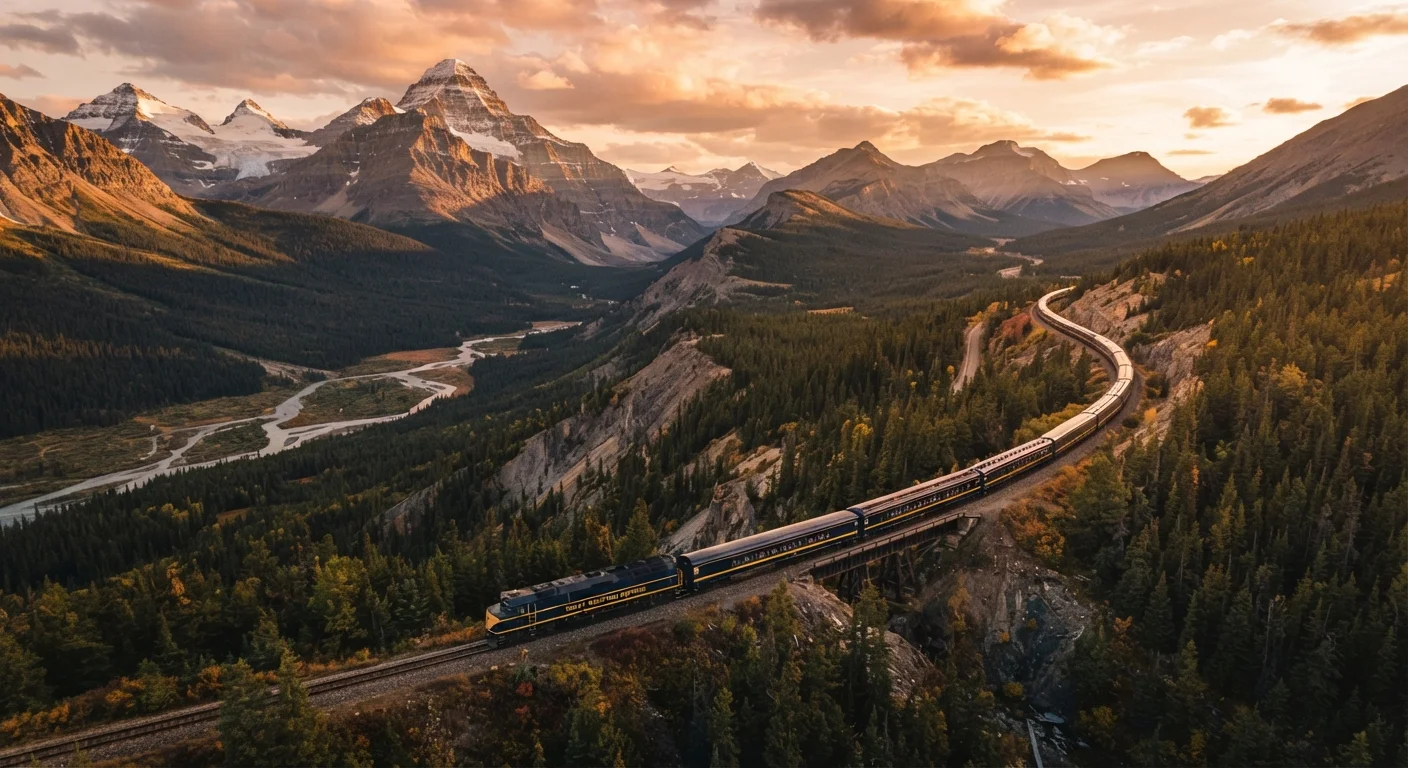
- Rocky Mountaineer (Canada): A daylight-only scenic service through British Columbia and Alberta, designed so passengers never miss a moment of the mountain landscapes.
When booking a multi-day sleeper route, opt for a lower berth if possible - it doubles as seating during the day and is easier to access at night without disturbing cabin-mates.
Experienced rail travelers consistently cite berth position as one of the small choices that most affects comfort on journeys of 24 hours or more.
Build at least one planned stop into any route spanning multiple days - breaking a six-day journey into two or three segments lets you explore cities along the way and avoids fatigue.
Continuous multi-day travel without breaks can diminish the enjoyment of the experience; staged segments tend to be more memorable and manageable.
Classes, Cabins, and What to Expect Onboard
Accommodation on long-distance trains generally falls into a few categories, and selecting the right one shapes the entire experience.
Seat classes range from open carriages with reclining seats (economical but fatiguing over multiple days) to reserved compartments with greater privacy. On overnight or multi-day routes, sleeper berths are the standard choice - these come in private cabins (typically one or two berths with a door) or shared compartments (four to six berths open to the corridor, common on the Trans-Siberian).
Luxury trains - such as the Venice Simplon-Orient-Express or the Rovos Rail in southern Africa - operate as rolling boutique hotels, with en-suite facilities, formal dining, and observation cars. These journeys command premium prices and are designed as curated experiences.
Dining arrangements also vary. Some routes have full dining cars with hot meals; others rely on vendor stops at stations or a buffet car with limited options. On longer journeys, it's worth researching what food is available and supplementing with your own supplies. Long-haul friction points - including delays and limited onboard resources - are worth anticipating before you board.
Pack for Temperature Swings
Train cars can shift between overheated and chilly within the same journey, especially on overnight routes or those crossing varied climates. Layering is more effective than packing a single heavy item. A lightweight travel blanket is also a worthwhile addition for overnight berths where provided bedding may be minimal.
Practical Planning Considerations
Long-distance rail journeys require planning that goes well beyond simply booking a ticket.
Booking windows: Popular routes - especially sleeper cabins on the Trans-Siberian or luxury train departures - can sell out months in advance. Research the typical booking lead time for your chosen route early.
Visas and entry requirements: A multi-country rail journey may require multiple visas. The Trans-Mongolian variant of the Trans-Siberian, for example, passes through Russia, Mongolia, and China - each with its own entry requirements. Always verify current visa rules through official government sources before booking, as regulations change. Our pre-departure checklist for long-haul travel covers documents, insurance, and other essentials.
Packing for confined spaces: You'll live out of your bag for days. Prioritize layers (train temperatures fluctuate), noise-canceling headphones, a good book or downloaded entertainment, a power bank, and any snacks or medications you might need. Storage space is limited.
Health and accessibility: Onboard conditions vary significantly between routes and operators. Travelers with mobility requirements should research accessibility in detail before booking, as older rolling stock on some routes can be challenging. For health-specific concerns, consult a travel medicine professional. See the broader travel planning reference for a structured overview of pre-trip milestones.
Verify Visa Requirements Independently
Visa rules for international rail routes - especially those crossing Russia, China, Mongolia, or Central Asian countries - change periodically and can vary by nationality. Do not rely solely on travel blogs or third-party booking sites for this information. Consult the official embassy or consulate websites of each country you will transit or enter, and allow sufficient processing time before your departure date.
Is Long-Distance Rail Right for You?
Long-distance train travel isn't a substitute for faster options - it's an argument that the journey itself matters. It suits travelers who find meaning in transition, who want to watch the world change gradually outside a window, and who are willing to trade speed for immersion.
It's less suited to travelers on tight schedules, those who need consistent connectivity, or anyone for whom confined shared spaces over multiple days sounds more stressful than restorative.
The honest truth is that a multi-day rail journey will likely include at least some discomfort - a delayed departure, a bumpy night in a shared berth, a dining car that runs out of your first choice. What experienced rail travelers often report is that these moments become part of the story rather than ruining it. The Travel Tips hub has practical guidance on safety, packing, and on-the-road problem-solving that applies directly to long-haul rail.
If the idea of crossing a continent at ground level - watching it unfold in real time rather than from 35,000 feet - sounds genuinely exciting, that instinct is probably telling you something worth listening to.
The content provided on our blog site traverses numerous categories, offering readers valuable and practical information. Readers can use the editorial team’s research and data to gain more insights into their topics of interest. However, they are requested not to treat the articles as conclusive. The website team cannot be held responsible for differences in data or inaccuracies found across other platforms. Please also note that the site might also miss out on various schemes and offers available that the readers may find more beneficial than the ones we cover.