

The Core Idea: A Plan for Your Money Before You Spend It
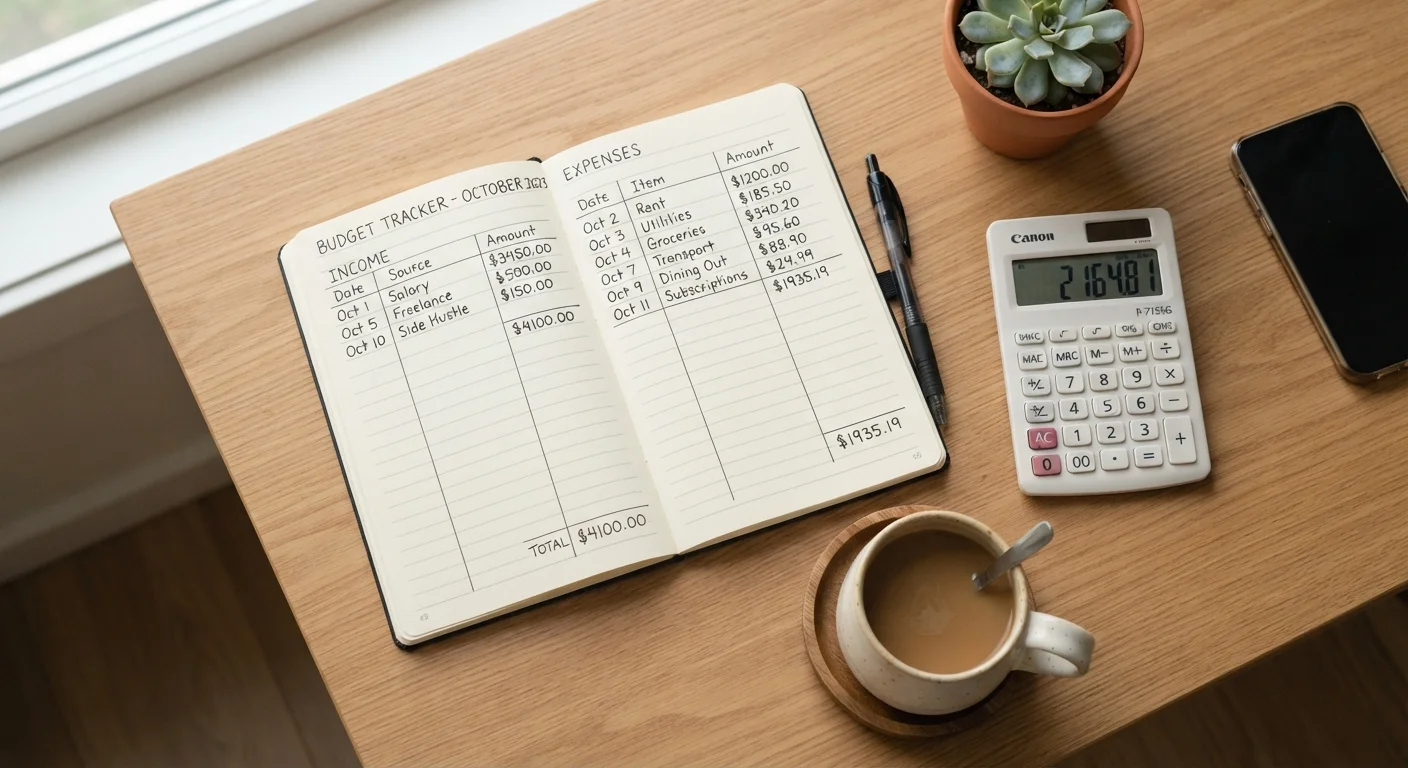
At its simplest, a personal budget answers one question: Does the money coming in cover what needs to go out - and leave room for what I want to save?
You start with your income - your take-home pay after taxes, or any other regular money coming in. Then you list your expected expenses: rent, utilities, groceries, transportation, subscriptions, and so on. The difference between those two numbers tells you whether you're on solid ground or heading for a shortfall.
That's the whole framework. Everything else - apps, spreadsheets, envelope systems - is just a delivery method for this same idea. For a deeper walkthrough of those first steps, see Personal Budgeting from the Ground Up.
~33%
U.S. adults with a detailed household budget
According to Gallup polling, roughly one in three American adults maintains a detailed monthly budget, suggesting most people manage money without a formal plan.
$1,400+
Average monthly non-housing consumer spending
Federal Reserve consumer expenditure data shows the average U.S. household spends well over $1,000 monthly on variable expenses - the category a budget most directly helps manage.
What a Budget Is Not
A lot of people avoid budgets because of what they imagine one to be. It's worth clearing that up directly.
- It's not a punishment. A budget doesn't exist to make you feel bad about spending money on things you enjoy. It exists to make sure you can afford the things that matter, including fun.
- It's not only for people in financial trouble. Budgets are just as useful when finances are stable - they help you build savings, avoid surprise deficits, and make deliberate choices.
- It's not a record of the past. A budget is forward-looking. Reviewing last month's bank statement is useful context, but it isn't a budget. A budget says: here's what I plan to do with next month's money.
- It's not one-size-fits-all. There's no single correct budget format. Some people use a detailed spreadsheet; others write three categories on a notepad. What matters is that it reflects your actual income and expenses.
For a fuller look at the misconceptions that hold people back, common budgeting myths are worth examining before you start.
Start With One Month of Real Numbers
Before writing your first budget, pull one month of actual bank or credit card statements. Use those real figures - not estimates - as your starting baseline. A budget built on honest numbers is far more likely to hold up than one built on optimistic guesses.
The Key Parts Every Budget Shares
Regardless of format, every functional budget has three components:
- Income: All money you reliably receive - wages, freelance income, benefits, side work. Use your net (after-tax) amount, since that's what actually lands in your account.
- Expenses: Everything you spend money on, grouped into categories. These typically split into fixed costs (rent, loan payments) that stay the same each month, and variable costs (groceries, gas) that fluctuate. Fixed, variable, and discretionary expenses each play a different role in your budget.
- Savings and goals: A solid budget treats saving as a planned expense - money set aside before you decide what's left over, not after. This might be an emergency fund, a vacation, or paying down debt faster.
When income minus expenses and savings equals zero - or close to it - you have what's called a zero-based budget: every dollar has a job. Other approaches are less granular but follow the same logic.
Why the Definition Matters for Actually Using One
People who think of a budget as a restriction tend to abandon it quickly. People who think of it as a decision-making tool tend to stick with it - because it helps rather than constrains.
When you understand that a budget is just your own intentions written down, it becomes something you can adjust. Had an unexpected car repair? Update the budget. Got a raise? Update the budget. The plan serves you, not the other way around.
This also means a budget that's "blown" one month isn't a failure - it's information. It tells you which categories need more realistic figures, or where an unexpected expense caught you off guard.
If you're ready to move from concept to action, Building a Budget That Holds Up to Real Life offers a practical end-to-end approach. And if you want to see where a budget fits in a broader picture of your finances, understanding net worth as a benchmark is a natural next step.
This article is for general informational and educational purposes only and does not constitute personalized financial advice. Consult a qualified financial professional for guidance specific to your situation.
Budgeting Apps Are Tools, Not Budgets
Apps and spreadsheet templates make budgeting easier to maintain, but the app itself isn't the budget - your decisions about income and spending categories are. Any format that helps you stick with a consistent review habit is the right one for you.
Frequently Asked Questions
Not quite. Tracking records what already happened; a budget plans what you intend to happen. They work best together - tracking tells you if your plan is realistic.
No. A budget is useful at any income level because it helps you allocate whatever money you have with intention. Lower incomes often benefit most, since there's less margin for error.
Most people review their budget monthly, since many bills and paychecks follow a monthly cycle. Major life changes - a new job, a move, a new expense - should trigger an immediate update.
A budget is a short-term, month-to-month tool. A financial plan is broader and covers long-term goals like retirement, investing, and insurance. A budget is often the starting point that feeds into a larger financial plan.
A budget can help you identify where money is leaking and redirect it toward savings goals. However, it doesn't guarantee savings - that depends on following through on the plan.
Variable-income budgets exist for exactly this situation. A common approach is to budget based on your lowest expected monthly income and treat anything above that as extra to be allocated intentionally.
The content provided on our blog site traverses numerous categories, offering readers valuable and practical information. Readers can use the editorial team’s research and data to gain more insights into their topics of interest. However, they are requested not to treat the articles as conclusive. The website team cannot be held responsible for differences in data or inaccuracies found across other platforms. Please also note that the site might also miss out on various schemes and offers available that the readers may find more beneficial than the ones we cover.