

Summary
22 items · 10-20 minutes
Why a Pre-Study Routine Matters
Most learners sit down to study without a plan - and then wonder why their focus drifts after twenty minutes. Research in cognitive psychology consistently shows that context and mental preparation affect how quickly we shift into a state of deep, productive learning. A short pre-session routine acts as a deliberate "on-ramp," signaling to your brain that focused work is beginning.
Think of this checklist the way a pilot thinks about a pre-flight check: it is not about distrust in your own abilities - it is about removing preventable obstacles before they interrupt you mid-session. Just as you might run through a planning checklist before a major trip (the kind of structured thinking described in a pre-trip planning checklist), a study readiness checklist keeps you from discovering that you are missing a critical textbook, have a distracting notification waiting, or haven't eaten in five hours - all after you have opened your notes.
Work through the checklist below before each session. With practice, the whole process takes ten to twenty minutes and pays for itself many times over in quality study time.
Environment Setup
Digital and Distraction Management
Physical Readiness
Materials Check
Goal and Mindset Clarity
Tools and Materials to Have Ready
Before you run through the checklist items, confirm you have the right tools at hand. Hunting for a charger or a specific handout mid-session is a common flow-breaker.
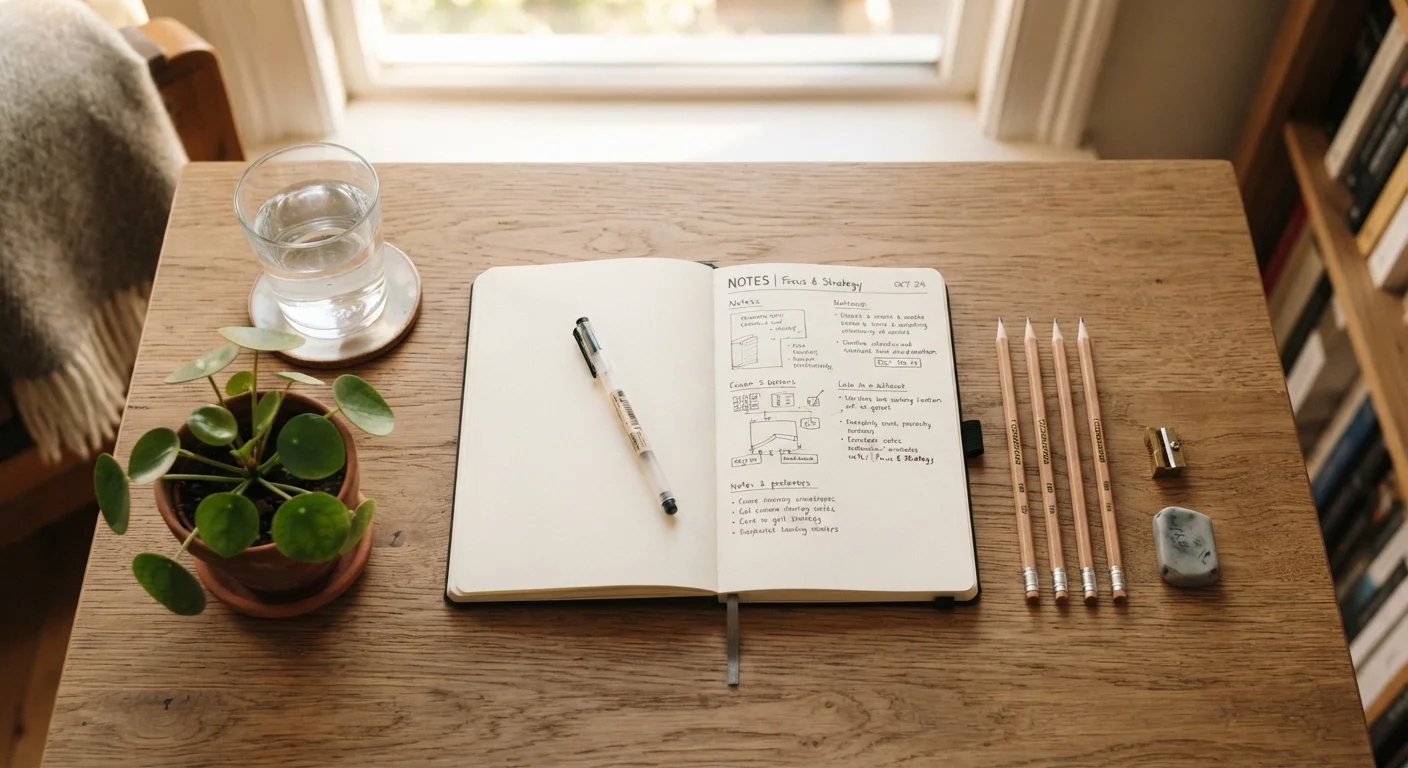
Notebook or dedicated study journal
Captures goals, notes, and stray thoughts in one place so your digital screen stays task-focused.
Timer (phone, watch, or standalone)
Defines your study block so you work with intention rather than drifting open-endedly.
Website or app blocker
Prevents impulsive tab-switching to social media or news during the session.
Water bottle
Keeps you hydrated throughout the session without requiring a break to get a drink.
Noise-cancelling headphones or earplugs
Manages ambient noise so you can control your auditory environment in shared spaces.
If you are evaluating a new course or learning programme and want to think more broadly about whether it fits your goals and schedule, the self-assessment checklist for course enrolment is a useful companion resource to work through beforehand.
Avoid Over-Preparing as Procrastination
There is a real risk of spending so much time "getting ready" that you postpone actual studying. Set a firm time limit on your pre-session routine - ten to twenty minutes is enough. If you notice yourself reorganizing your desk for the third time, that is a signal to start, not to keep preparing.
Getting the Most Out of Every Session
The checklist covers four dimensions of readiness: your environment, your body, your materials, and your mindset. Neglecting any one of them tends to undermine the others. A perfectly quiet room won't help much if you are dehydrated and have no clear goal for the hour.
One Clear Goal Per Session Is Non-Negotiable
Without a specific, written goal, study sessions tend to slide into passive re-reading - a strategy that feels productive but produces weak long-term retention. Before you read a single page, write down exactly what you intend to accomplish. This single habit has the strongest evidence base of any item in this checklist and takes less than sixty seconds.
Consistency is the real driver of improvement. Running this checklist before every session - not just important exam sessions - trains your brain to associate the routine with focused effort, gradually lowering the activation energy needed to concentrate. Over time, the routine itself becomes a productivity trigger.
The content provided on our blog site traverses numerous categories, offering readers valuable and practical information. Readers can use the editorial team’s research and data to gain more insights into their topics of interest. However, they are requested not to treat the articles as conclusive. The website team cannot be held responsible for differences in data or inaccuracies found across other platforms. Please also note that the site might also miss out on various schemes and offers available that the readers may find more beneficial than the ones we cover.