

Summary
24 items · 2-4 hours over one or two weekends
Why Pre-Winter Prep Matters
Cold weather is unforgiving to a home that isn't ready. Frozen pipes, overflowing gutters, and a heating system that fails on the coldest night of the year are all largely preventable - but only if you act before temperatures drop. This checklist walks you through the key systems, surfaces, and spaces to inspect and address in fall, ideally before your first hard freeze.
Work through the groups below at your own pace. Some tasks are quick Saturday-morning jobs; others, like heating system servicing, need to be booked ahead because HVAC technicians fill up fast in October and November. If your home has a garden or outdoor space, pair this list with our guide on getting your garden ready for winter for complete seasonal coverage.
Book Heating Services Early
HVAC technicians, plumbers, and chimney sweeps are typically booked out weeks in advance once cold weather arrives. Schedule any professional service appointments in September or early October if possible - waiting until November often means long delays or premium emergency rates.
Tools and Resources You'll Need
Most of these checks require basic household tools and a few inexpensive supplies. Have them ready before you start so you can move efficiently through the list.
Caulking gun and exterior-grade caulk
Sealing gaps around windows, doors, and exterior penetrations to prevent cold air infiltration.
Foam pipe insulation (pipe lagging)
Wrapping exposed pipes in unheated areas to protect them from freezing temperatures.
Weatherstripping tape or door seals
Replacing worn seals on exterior doors to eliminate draughts and improve energy efficiency.
Replacement furnace filters
Maintaining clean airflow through your heating system for efficient and safe operation.
Gutter scoop and garden hose
Removing debris from gutters and flushing downspouts to confirm unobstructed drainage.
Radiator bleed key
Releasing trapped air from hot-water radiators to restore efficient heat distribution.
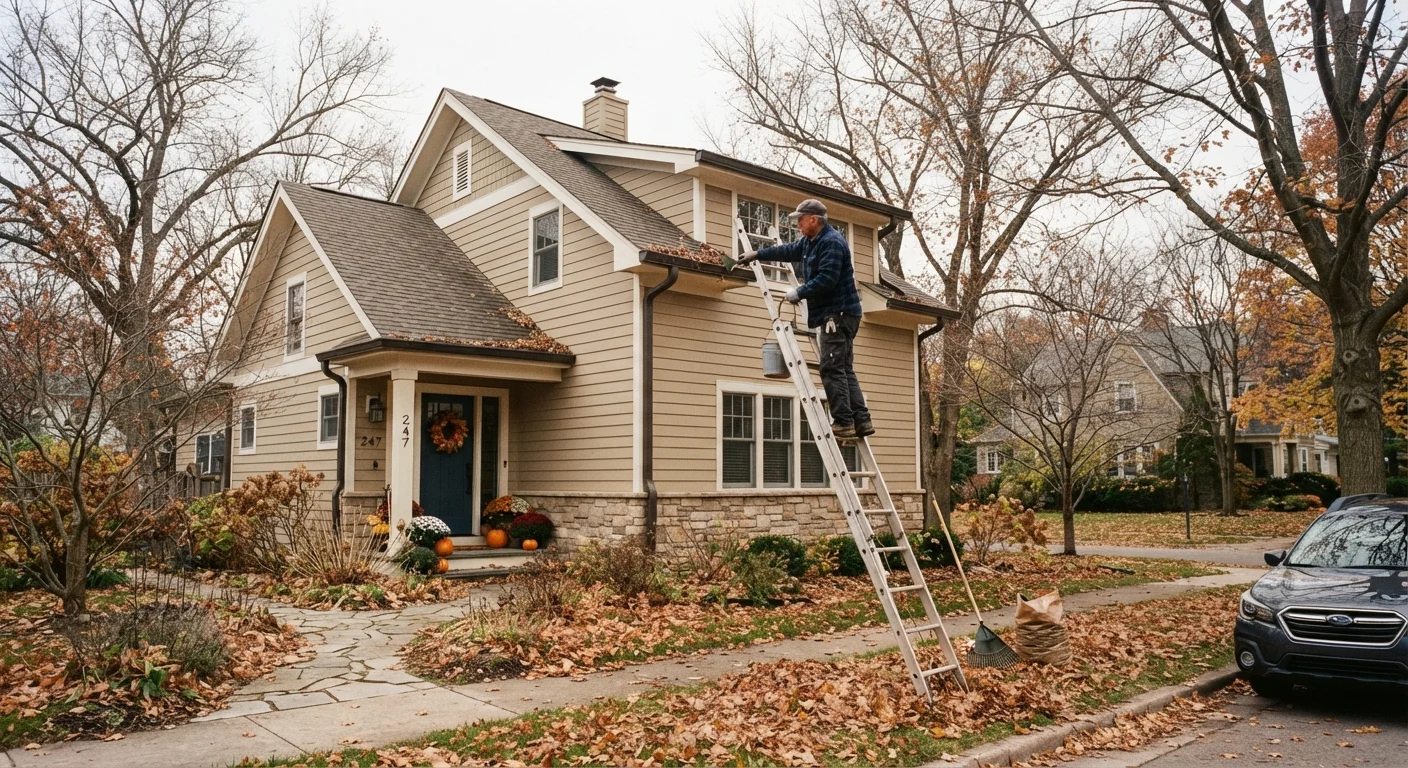
Extension ladder
Safely accessing gutters and low-slope roof sections for inspection and cleaning.
Battery tester or spare batteries
Verifying and replacing batteries in smoke and carbon monoxide detectors.
The Full Pre-Winter Checklist
Work through each group in order, or tackle them on separate days depending on your schedule. Mark items off as you go - the checklist is most useful when treated as a live document rather than a one-time read.
Roof and Gutters
Heating System
Plumbing and Pipe Protection
Draught-Proofing and Insulation
Safety Systems
Exterior and Emergency Readiness
Never Ignore Carbon Monoxide Risks
As homes are sealed up for winter and heating systems run continuously, carbon monoxide (CO) risks increase significantly. CO is colorless and odorless - a functioning detector is your only reliable warning. If your CO detector alarms, evacuate immediately and call emergency services. Do not re-enter until the home has been inspected and cleared by qualified responders.
When to Call a Professional
Several items on this list - particularly anything involving your furnace or boiler, gas lines, electrical panels, or structural roofing - go beyond safe DIY territory for most homeowners. Licensed HVAC technicians, licensed electricians, and roofing contractors should handle those jobs. Attempting gas appliance repairs or electrical panel work without the right qualifications is genuinely dangerous and may also void your homeowner's insurance coverage or violate local building codes.
Before hiring, verify that any contractor is licensed and insured in your state. Ask for a written estimate and confirm whether a permit is required for the work. Your local building department can tell you which projects need inspection. The time and cost of doing things correctly up front is almost always less than remediation after an incident.
For a broader seasonal lens on home upkeep that extends beyond the house itself, the Garden & Outdoors hub covers structural and landscaping prep that affects your property all winter long.
The content provided on our blog site traverses numerous categories, offering readers valuable and practical information. Readers can use the editorial team’s research and data to gain more insights into their topics of interest. However, they are requested not to treat the articles as conclusive. The website team cannot be held responsible for differences in data or inaccuracies found across other platforms. Please also note that the site might also miss out on various schemes and offers available that the readers may find more beneficial than the ones we cover.