

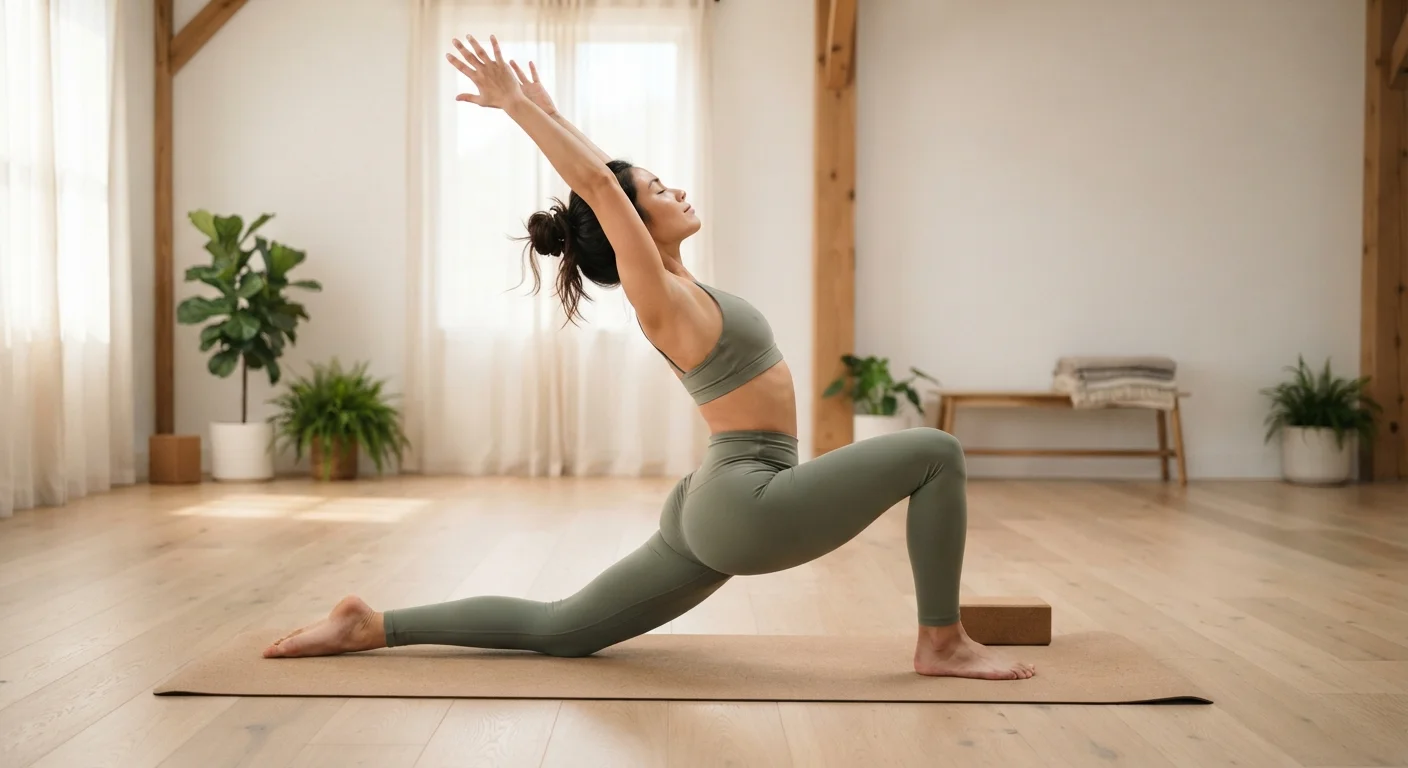
Option A
Flexibility
The passive capacity of a muscle to lengthen.
Best for: People looking to reduce muscle tension, improve posture, and increase the range a joint can be moved by an outside force.
Option B
Mobility
The active ability to control movement through a range of motion.
Best for: People aiming to move more freely, prevent injury, and build functional strength through a joint's full working range.
What's the Difference, Exactly?
The terms flexibility and mobility get used interchangeably in fitness conversations - but they describe distinct physical qualities. Understanding the difference helps you train more effectively and set realistic expectations.
Flexibility is a property of muscle tissue. It describes how much a muscle can passively lengthen - that is, how far it will stretch when an external force (gravity, another person, or a prop) is applied. Think of a static hamstring stretch: your hamstring may lengthen considerably, but you're not necessarily controlling that range under your own power.
Mobility refers to a joint's ability to move actively through its intended range of motion with control. It's not just about how far a joint can move, but whether the muscles surrounding it can generate and stabilize movement throughout that arc. A hip with good mobility can lower into a deep squat and return smoothly - without wobbling or compensating elsewhere.
A useful way to frame it: flexibility is a component of mobility, but mobility also requires neuromuscular coordination, joint health, and strength. You can be quite flexible yet still have limited mobility - and vice versa.
| Criterion | Flexibility | Mobility |
|---|---|---|
| Definition | Passive ability of muscle to lengthen | Active control of joint through range of motion |
| Key requirement | Muscle extensibility | Strength, coordination, and joint health |
| Measured by | How far a muscle stretches passively | How well a joint moves under active control |
| Primary training method | Static and passive stretching | Dynamic movement, strength through range |
| Functional carry-over | Moderate - reduces tension and improves posture | High - directly supports everyday and athletic movement |
| Can you have one without the other? | Yes - flexible muscles, poor joint control | Yes - good joint control, limited muscle length |
Why Both Matter for Everyday Movement
Most of us aren't training for elite sport. But even everyday tasks - bending to pick something up, reaching overhead, sitting comfortably for extended periods - depend on having adequate flexibility and mobility in key areas.
When flexibility is restricted, muscles pull on joints in ways that can cause discomfort, alter posture, and limit movement options. Chronically tight hip flexors from prolonged sitting, for example, are commonly associated with lower-back discomfort. Regular stretching can help restore some of that muscle length over time.
Mobility limitations often show up as compensations: the body finds a workaround when a joint can't do what's being asked of it. Someone with limited thoracic (mid-back) mobility, for instance, may arch excessively from the lower back when reaching overhead. Over time, these compensations can contribute to injury.
~80%
Adults reporting low-back pain in their lifetime
The American Chiropractic Association has noted that low-back pain affects a large majority of adults at some point, often linked to poor movement patterns and restricted mobility.
3x/week
Recommended stretching frequency per major muscle group
The American College of Sports Medicine suggests stretching each major muscle group at least two to three days per week for general flexibility maintenance.
Addressing both qualities is complementary. See also our look at structured workouts versus everyday movement for context on how planned exercise and general activity each contribute to long-term physical health.
How to Train Each One
Flexibility and mobility respond to different types of training, though there is meaningful overlap.
For Flexibility
- Static stretching: Holding a stretch for 20-60 seconds after exercise, when muscles are warm, is the most commonly used approach.
- Passive stretching: Using gravity, props, or a partner to gently extend a muscle beyond its usual resting length.
- Yoga and similar practices: Many yoga styles systematically work through the body's major muscle groups, building flexibility over time.
For Mobility
- Dynamic warm-ups: Controlled movements that take joints through their range of motion before activity - leg swings, hip circles, arm rotations.
- Strength through range: Exercises like deep goblet squats or Romanian deadlifts build strength at the end ranges of motion, which is a key component of functional mobility.
- Targeted joint work: Exercises specifically designed to improve thoracic rotation, hip flexion, or shoulder mobility address common restriction points.
Just as mindfulness and meditation are related but call for different practices, flexibility and mobility each benefit from their own dedicated attention - even if some exercises serve both goals simultaneously.
This article is for general informational purposes only and does not constitute medical or professional fitness advice. If you have an existing injury, chronic condition, or other health concern, consult a qualified healthcare or physiotherapy professional before beginning any new movement program.
The content provided on our blog site traverses numerous categories, offering readers valuable and practical information. Readers can use the editorial team’s research and data to gain more insights into their topics of interest. However, they are requested not to treat the articles as conclusive. The website team cannot be held responsible for differences in data or inaccuracies found across other platforms. Please also note that the site might also miss out on various schemes and offers available that the readers may find more beneficial than the ones we cover.