

Why Joint-Friendly Movement Matters
Joint pain, stiffness, or sensitivity - whether from arthritis, an old injury, or simply the wear that comes with age - can make conventional exercise feel off-limits. But the evidence points in a clear direction: staying sedentary tends to make joints feel worse over time, not better. Regular movement helps maintain the muscle support around joints, preserves range of motion, and supports overall well-being.
The key is choosing forms of exercise that minimize impact forces - the jarring stress transmitted through your body when your foot strikes the ground. Low-impact movement keeps at least one foot in contact with a surface at all times (or removes body weight from the equation entirely), reducing the load on knees, hips, ankles, and the spine.
The options below cover a range of settings, intensities, and fitness levels. None of them require special athletic ability, and most can be adapted as your fitness improves. For a broader look at how gentler workouts fit into an overall healthy lifestyle, see the case for low-intensity exercise.
Swimming and Water Aerobics
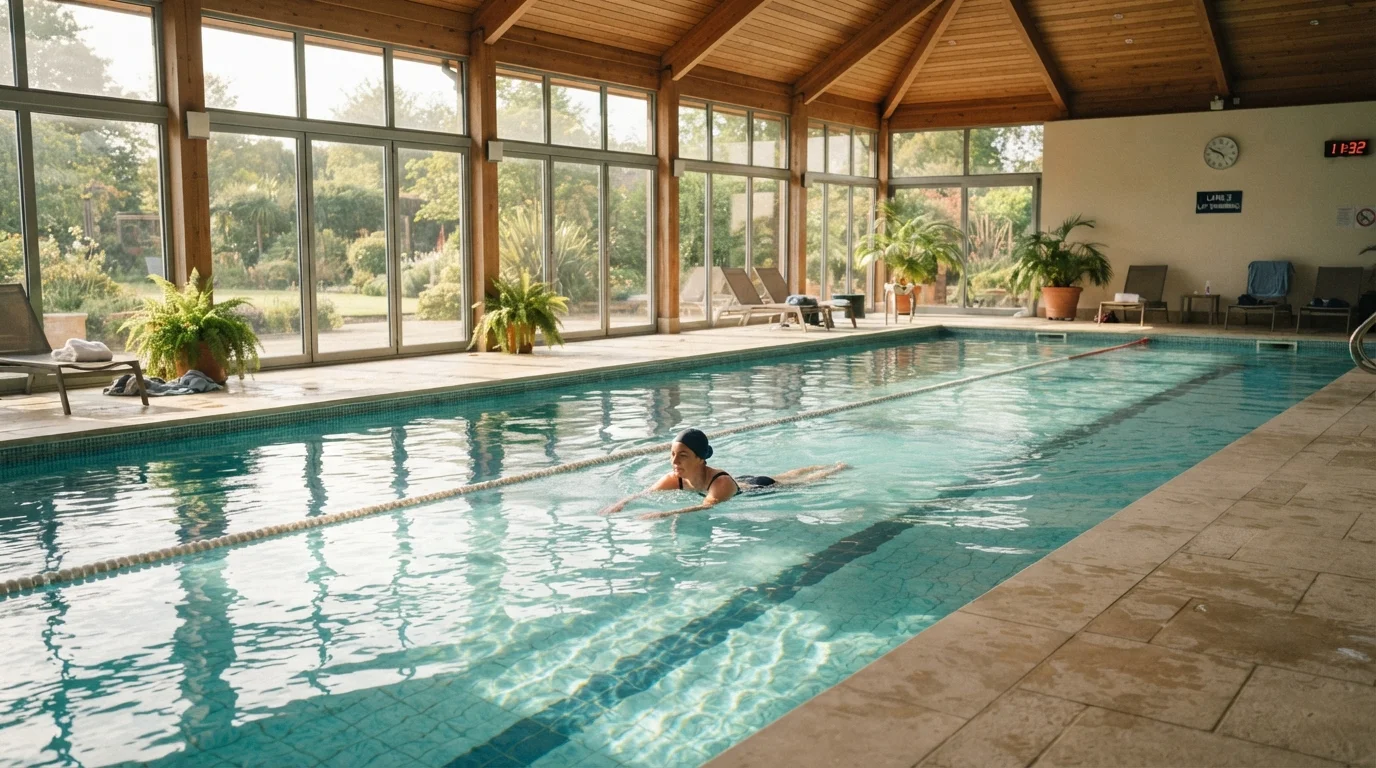
Water is one of the most forgiving exercise environments available. Buoyancy offsets a significant portion of your body weight - depending on water depth, you may only be bearing 10-25% of your normal load - which dramatically reduces stress on weight-bearing joints. At the same time, water provides natural resistance that strengthens muscles with every stroke or movement.
Swimming laps works the cardiovascular system effectively, while water aerobics classes offer structured movement that can be done comfortably even by people with significant joint limitations. Many community recreation centers and YMCAs offer both options at accessible price points.
Buoyancy can reduce the load on your joints by as much as 75% compared to land-based exercise.
Walking
Walking is the most accessible form of low-impact exercise for most people - it requires no equipment beyond supportive footwear and can be done almost anywhere. Unlike running, walking keeps at least one foot on the ground at all times, which significantly reduces the impact forces reaching your knees and hips.
Evidence consistently links regular walking with improvements in cardiovascular health, mood, and joint function in people with osteoarthritis. Starting with flat, even terrain and gradually adding time or mild incline is a sensible progression. For a detailed look at how walking compares to more vigorous movement, see walking vs. running.
Walking requires no equipment and has strong evidence behind it for joint health and cardiovascular fitness.
Cycling (Stationary or Outdoor)
Cycling shifts your body weight onto the saddle rather than your legs, removing much of the impact that affects knees and hips during walking. The circular pedaling motion also moves knee and hip joints through their range of motion in a controlled way, which can help maintain mobility and reduce stiffness.
Stationary bikes offer additional stability and are particularly useful for people who are concerned about balance. Recumbent bikes - where the rider sits in a reclined position with legs extended forward - place even less strain on the lower back and hips, making them a popular option for older adults or those managing back problems.
Cycling supports your weight through the saddle, making it one of the easiest exercises on the knees.
Yoga and Gentle Stretching
Yoga combines flexibility work, balance training, and low-load strength building in a format that can be adapted to almost any fitness level. Chair yoga and restorative yoga styles are specifically designed for people with limited mobility or joint sensitivity. Research suggests regular yoga practice may help reduce pain and improve function in people with conditions such as knee osteoarthritis.
The emphasis on mindful movement and body awareness also helps practitioners learn to recognize their limits - reducing the risk of pushing through pain signals that could indicate harm. Look for beginner or therapeutic classes if you are new to the practice.
Yoga builds strength and flexibility simultaneously while teaching you to move within your body's safe range.
Elliptical Training
The elliptical machine replicates a walking or running stride without the foot ever leaving the pedal, eliminating the repetitive ground impact that makes running problematic for many joints. Studies have found that elliptical training produces significantly lower peak forces on the knee compared to treadmill running at a comparable intensity.
Most machines also include upper body handles, allowing you to engage your arms and increase the cardiovascular challenge without adding joint stress. Resistance and incline can be adjusted to keep the workout progressive as your fitness improves.
The elliptical mimics running's cardiovascular demand while cutting peak knee forces substantially.
Tai Chi
Tai chi is a gentle, flowing movement practice originating in Chinese martial arts traditions. Its slow, deliberate sequences improve balance, coordination, and lower-body strength without placing significant load on the joints. Research has found that tai chi can reduce pain and improve physical function in people with knee osteoarthritis, and it is frequently recommended by physical therapists for older adults at risk of falls.
Classes are widely available at community centers, and many instructors offer seated or modified versions for people with significant mobility limitations. It is a practice that tends to reward long-term, consistent engagement. See how this fits into a broader movement picture in our guide to structured workouts vs. everyday movement.
Tai chi is one of the few exercises with strong evidence for both fall prevention and joint pain reduction.
Getting Started Safely
Starting any new exercise routine calls for a gradual approach - this is especially true when joints are a concern. Begin with shorter sessions and build duration slowly over several weeks. Pay attention to how your body responds in the 24 to 48 hours after a workout; mild muscle fatigue is normal, but sharp or swelling joint pain is a signal to ease back and speak with a healthcare provider.
Warm Up Before Every Session
A brief warm-up - five to ten minutes of gentle movement at a reduced pace - prepares your joints and surrounding muscles for exercise, reducing injury risk. This is especially important in cold weather or after periods of inactivity. End each session with an equally gentle cool-down to help circulation return to baseline and reduce post-exercise stiffness.
It's also worth thinking about how joint-friendly movement fits alongside the rest of your day. If you spend long hours at a desk, the strategies outlined in our guide to building a weekly movement routine for desk workers can help you weave more activity into a sedentary schedule without overdoing it.
This article is for general informational purposes only and does not constitute medical advice. If you have a joint condition, injury, or chronic health concern, consult a qualified healthcare professional before beginning any new exercise program.
The content provided on our blog site traverses numerous categories, offering readers valuable and practical information. Readers can use the editorial team’s research and data to gain more insights into their topics of interest. However, they are requested not to treat the articles as conclusive. The website team cannot be held responsible for differences in data or inaccuracies found across other platforms. Please also note that the site might also miss out on various schemes and offers available that the readers may find more beneficial than the ones we cover.