

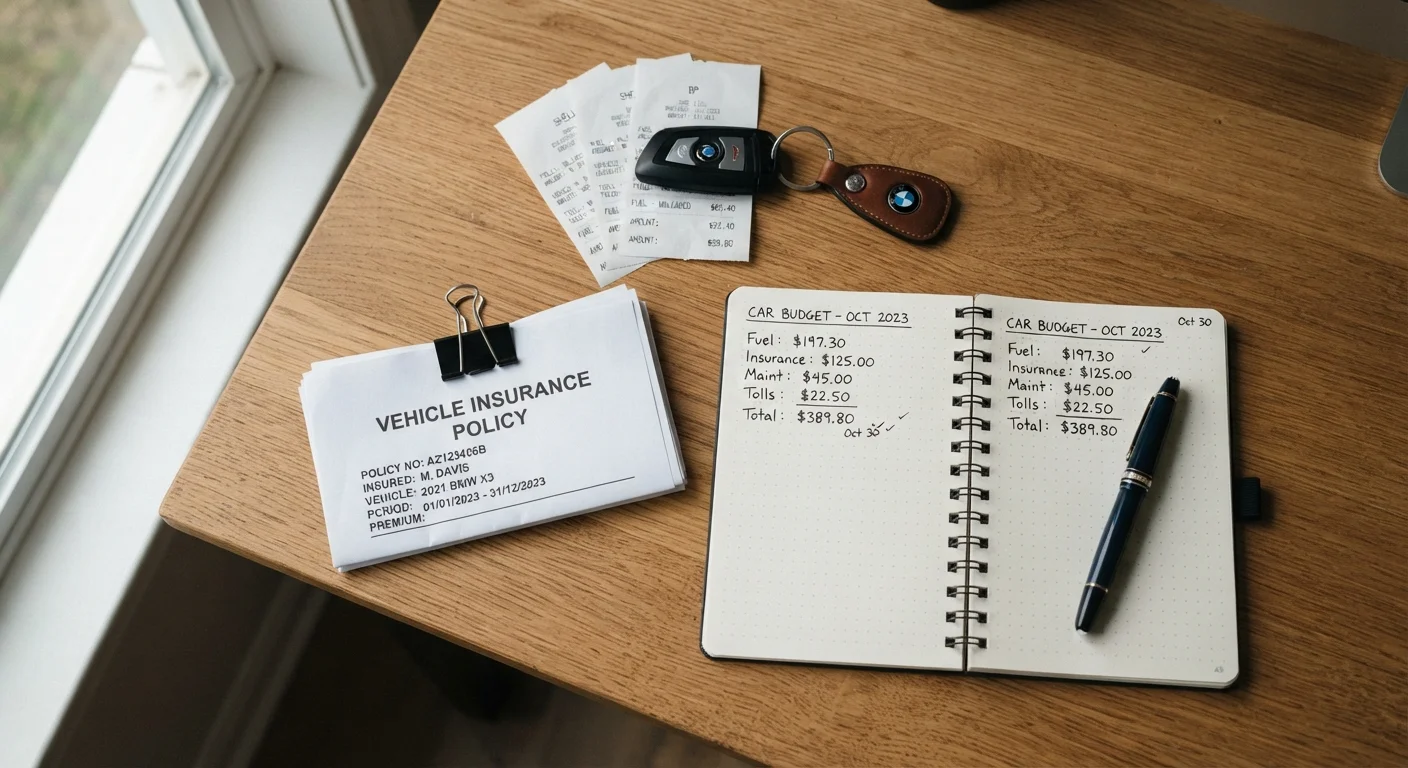
Why Most Car Budgets Fall Short
Many drivers budget for their car payment and insurance, then treat everything else as it comes. This approach works until it doesn't - a single unexpected repair or a tire replacement can knock a monthly budget sideways. The problem isn't that car ownership is unpredictable; it's that the full picture of annual costs rarely gets written down in one place.
Before diving into the steps, it helps to understand the cost categories you're working with. The true cost of owning a car beyond the sticker price breaks down into two broad groups:
- Fixed costs - insurance, registration, loan or lease payments, and parking permits. These are predictable and typically billed on a set schedule.
- Variable costs - fuel, maintenance, repairs, tires, tolls, and incidentals. These fluctuate with how much you drive, how old the vehicle is, and plain bad luck.
Depreciation - the loss in your vehicle's value over time - is the largest ownership cost for most people but is difficult to budget for directly. If you're tracking net worth or planning to sell or trade in within a few years, it's worth understanding; for cash-flow budgeting, focus on the out-of-pocket categories above.
Irregular expenses that most budgets forget to include are almost always car-related - the annual inspection fee, a new set of tires, or a service interval that falls every 30,000 miles rather than every year. A dedicated car budget catches all of these before they catch you.
What you will need
What to Do After You Build Your Budget
A car budget is only useful if it's connected to how you manage money overall. Once you have your annual total and monthly figure, feed it into your household spending plan. If you haven't mapped out your broader monthly cash flow yet, the guide on mapping your monthly cash flow is a practical starting point for making sure every dollar has a home.
Spreadsheet software
Organize cost categories, run annual totals, and update figures easily each year.
Bank or credit card statements
Review actual fuel, servicing, and repair spending from the past 12 months to anchor estimates in reality.
Vehicle service manual or manufacturer schedule
Identify upcoming scheduled maintenance items - such as brake fluid changes or timing belt replacement - so costs can be planned in advance.
Mileage tracking app or logbook
Calculate accurate fuel costs based on real annual miles driven rather than guesswork.
Set a calendar reminder to revisit your car budget each year - ideally around your insurance renewal date. Vehicle age, mileage, driving patterns, and insurance rates all shift, and an outdated budget is as misleading as no budget at all. The annual car ownership checklist is a useful companion exercise: running through it at the same time as your budget review ensures that what you're spending aligns with what the vehicle actually needs.
For those who want to weave the car budget into a complete personal spending plan, building a budget that holds up to real life covers the full process from income tracking to monthly reviews - including how to handle the variable expenses that make car ownership one of the trickier categories to plan for accurately.
Gather 12 months of actual spending data
Pull together your bank and credit card statements from the past year and highlight every car-related transaction: fuel fill-ups, insurance payments, service bills, parking, tolls, car washes, and any repair receipts. If you don't have a full year of data, use six months and double it as a starting estimate - then adjust as you gather more information. This historical baseline is the most reliable foundation for any car budget.
List every fixed annual cost
Fixed costs are predictable and occur on a set schedule. List each of the following and note the annual amount:
- Insurance premium - use your renewal notice for the exact figure
- Vehicle registration and tags - check your state's DMV fee schedule
- Loan or lease payments - multiply your monthly payment by 12
- Parking permit or garage rental - if you pay a flat annual or monthly rate
Add these up to get your fixed cost subtotal. These amounts rarely change mid-year, making them the easiest category to nail down.
Estimate annual fuel costs
Fuel is your largest variable cost for most drivers. Calculate it using this simple formula:
(Annual miles driven ÷ Vehicle MPG) × Average price per gallon = Annual fuel cost
If you drove 12,000 miles in a vehicle averaging 28 MPG and paid an average of $3.50 per gallon, your fuel cost is approximately $1,500. Use your real mileage from the past year if you have it - odometer readings at oil changes are a useful reference.
Budget for scheduled maintenance
Consult your vehicle's owner's manual or manufacturer service schedule to identify what maintenance is due in the coming year. Common items include:
- Oil and filter changes (typically every 5,000-7,500 miles for conventional oil)
- Tire rotation and balance
- Air filter replacement
- Brake fluid, coolant, or transmission fluid service
- Spark plugs and belts if interval-based
Get written estimates from a qualified mechanic for any larger scheduled jobs. Add the total of all anticipated maintenance to your budget as a known annual line item.
Set aside a repair reserve
No vehicle is immune to unexpected repairs - a failed alternator, a cracked brake rotor, or a blown tire can arrive without warning. A common rule of thumb is to set aside 1-2% of your vehicle's current market value each year as a repair reserve. On a $15,000 car, that's $150-$300 per year at minimum. Older vehicles and those with higher mileage warrant the higher end of that range. Treat this as a monthly transfer to a dedicated savings account, not as money you expect to spend - but plan as though you will.
Account for tires and wear items
Tires are a significant periodic expense that many drivers don't plan for. A set of four mid-range tires typically runs between $400 and $800 installed, depending on vehicle size. If tires last four years on average, budget roughly $100-$200 per year as an accrual even when you don't expect to buy tires this year. Also factor in wiper blades, brake pads (if not already in your service schedule), and any other wear items approaching their service life.
Include parking, tolls, and incidentals
Review your statements for variable parking costs, toll charges, car wash visits, and roadside assistance membership fees. These small amounts accumulate quickly over a year. Total them up from your historical data and add a modest buffer - perhaps 10% - to account for trips or circumstances not reflected in last year's pattern.
Total all categories and divide into monthly amounts
Sum every category: fixed costs, fuel, maintenance, repair reserve, tires, and incidentals. This is your realistic annual car budget. Divide by 12 to get a monthly figure you can incorporate into your broader household budget. If the monthly total surprises you, review each category individually - it's often the repair reserve and tires that people forget to include, not the obvious costs like insurance.
This article is for general informational purposes only and does not constitute financial or legal advice. Costs and regulatory requirements vary by state and individual circumstances. Consult a qualified professional for advice specific to your situation.
The content provided on our blog site traverses numerous categories, offering readers valuable and practical information. Readers can use the editorial team’s research and data to gain more insights into their topics of interest. However, they are requested not to treat the articles as conclusive. The website team cannot be held responsible for differences in data or inaccuracies found across other platforms. Please also note that the site might also miss out on various schemes and offers available that the readers may find more beneficial than the ones we cover.