

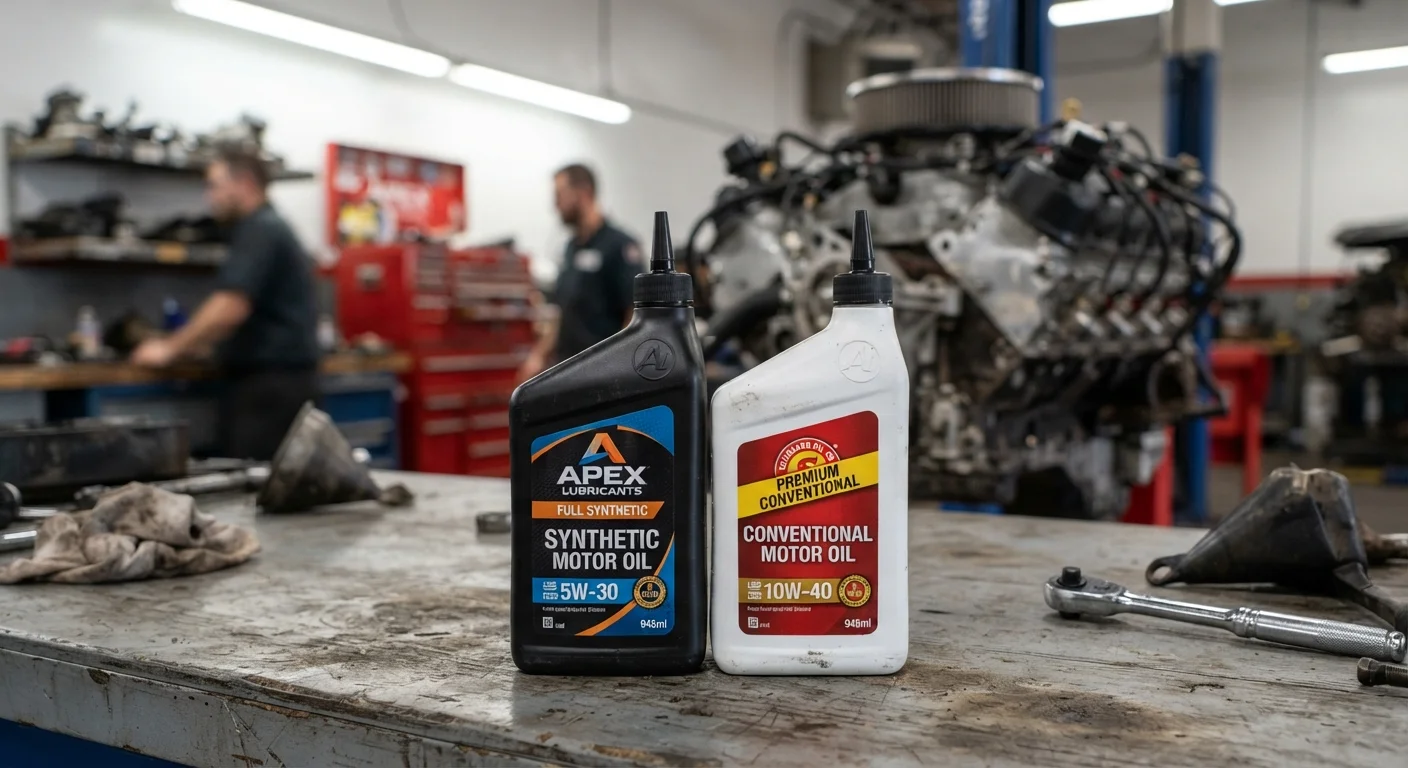
Option A
Synthetic Motor Oil
The engineered, high-performance lubricant.
Best for: Drivers who want maximum engine protection, own a high-performance or late-model vehicle, or face extreme temperature conditions.
Option B
Conventional Motor Oil
The time-tested, naturally derived standard.
Best for: Owners of older or simpler engines with low mileage demands who follow frequent oil change schedules.
What Makes These Two Oils Different?
At the most basic level, the difference comes down to origin and structure. Conventional motor oil starts as crude petroleum that is pumped from the ground, then refined to remove impurities. The result is a lubricant that works, but carries some natural inconsistencies - molecules of varying sizes and shapes that can affect how the oil behaves under stress.
Synthetic motor oil, by contrast, is built in a lab. Chemists start with a base stock - often derived from natural gas or refined petroleum - and then engineer it at the molecular level to create a highly uniform fluid. This precision produces an oil with consistent molecular weight, fewer impurities, and predictable performance across a wide range of conditions.
Think of it like this: conventional oil is refined, synthetic is designed. That distinction shapes how each oil performs when your engine is cold, running hot, or under heavy load.
| Criterion | Synthetic Motor Oil | Conventional Motor Oil |
|---|---|---|
| Origin | Chemically engineered base stock | Refined crude petroleum |
| Molecular consistency | Uniform, precisely structured | Variable, naturally occurring |
| Cold-weather performance | Flows readily in low temperatures | Slower to circulate when cold |
| High-temperature stability | Resists thinning under heat | More prone to viscosity breakdown |
| Typical change interval | 7,500-10,000+ miles (varies) | 3,000-5,000 miles (varies) |
| Cost per quart | Higher | Lower |
| Sludge resistance | Strong | Moderate |
Performance, Protection, and Change Intervals
Because synthetic oil has a more uniform molecular structure, it flows more readily when an engine is first started in cold weather - a critical moment when most engine wear occurs. It also maintains a more stable viscosity at high temperatures, resisting the thinning that can leave engine parts exposed. For drivers in regions with harsh winters or sweltering summers, this thermal stability matters.
Synthetic oil also resists oxidation and the buildup of sludge more effectively than conventional oil. This translates to longer useful life. Many synthetic formulations are rated for 7,500 to 10,000 miles or more between changes, while conventional oil is typically changed every 3,000 to 5,000 miles depending on driving conditions and the manufacturer's recommendations.
That said, longer intervals don't mean skipping checks. Oil level and condition should still be monitored regularly, regardless of oil type. Understanding viscosity grades is also part of this equation - see our guide to engine oil grades and viscosity for a closer look at what those numbers on the label actually mean.
~7,500-10,000 mi
Typical synthetic oil change interval
Many synthetic oil formulations are rated for extended intervals, though actual intervals depend on driving conditions and manufacturer guidance.
3,000-5,000 mi
Typical conventional oil change interval
Conventional oil generally requires more frequent changes, particularly under severe driving conditions such as frequent short trips or towing.
2-4x
Approximate cost premium for synthetic
Synthetic oil typically costs two to four times more per quart than conventional, though pricing varies by brand and formulation.
Cost, Compatibility, and What Your Manual Says
Synthetic oil costs more per quart - often two to four times the price of conventional. However, when you factor in fewer oil changes per year, the real-world cost difference narrows considerably for many drivers.
A common question is whether switching from conventional to synthetic could cause leaks in older engines. In modern vehicles, this concern is largely unfounded - synthetic oil does not cause seals to fail. In very old engines with existing seal wear, any oil type change could potentially expose pre-existing issues, so it's worth consulting a qualified mechanic before changing oil type in a high-mileage older vehicle.
The most reliable guide is always your vehicle's owner's manual. Manufacturers specify the oil type and viscosity grade that best suits your engine's design. Some newer vehicles explicitly require full synthetic. Others are more flexible. Following the manufacturer's specification protects your engine and, in some cases, your warranty. If you're uncertain, a trusted mechanic can help you interpret the recommendation for your specific situation.
Synthetic Blends: A Middle Ground
Some products on the market are labeled as synthetic blends, mixing conventional base stock with a portion of synthetic oil. These blends can offer improved performance over straight conventional oil at a lower price point than full synthetic. They may suit drivers who want a step up in protection without committing fully to the higher cost of synthetic. As always, check your owner's manual for compatibility before making a switch.
The content provided on our blog site traverses numerous categories, offering readers valuable and practical information. Readers can use the editorial team’s research and data to gain more insights into their topics of interest. However, they are requested not to treat the articles as conclusive. The website team cannot be held responsible for differences in data or inaccuracies found across other platforms. Please also note that the site might also miss out on various schemes and offers available that the readers may find more beneficial than the ones we cover.